
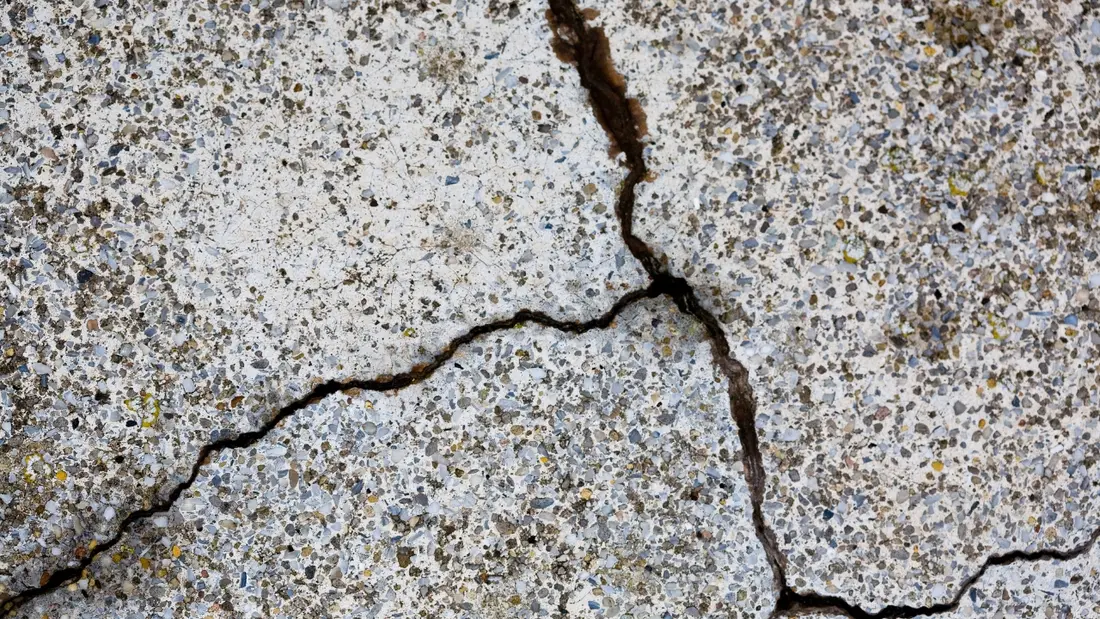
Concrete is tough, but it is not indestructible. Most of the problems we get called out for around South-East Melbourne trace back to the same handful of causes: a mix that was not quite right, curing that was rushed, or ground movement nobody planned for. Here are the eight we see most, and what actually fixes each one.
1. Cracks
The most common complaint we get. Fine, shallow cracks are usually cosmetic and can be filled with an epoxy or polymer-based filler once you know they are not moving. Wider or deeper cracks are a different story. If a crack runs through the full depth of the slab or keeps reopening after you fill it, that is a sign of movement below, and the fix is more than a tube of filler. We assess before we patch, not after.
2. Scaling
Scaling is when the top layer of concrete peels or flakes away, usually from weather exposure the surface was never sealed against. The loose material needs to come off completely before a surface treatment or sealer goes back on. Left alone, scaling opens the door for water to keep working on the layer underneath.
3. Spalling
Spalling looks similar to scaling but runs deeper, often down to the reinforcement, and usually points to a mix or installation issue from the original pour. The damaged concrete has to be cut out and replaced with a proper repair mortar, not skimmed over. Our guide to repairing spalling on garage floors walks through the full process.
4. Discolouration
Sun exposure, chemical reactions or poor curing can leave patchy colour across a slab. A surface stain or treatment restores a uniform look, but finding the actual cause first stops it happening again.
5. Curling
Temperature differences between the top and bottom of a slab pull the edges up. Control joints, cut in during installation, let the slab move without curling in the first place. If curling shows up after the fact, it needs a proper look at what is causing the differential before deciding on a fix.
6. Settlement
When the soil underneath a slab sinks, the slab follows it. Polyurethane foam injection lifts and stabilises a settled slab without ripping it out, in most cases. Left alone, settlement becomes a trip hazard fast.
7. Deterioration
General wear from weather and chemical exposure builds up over years. Badly deteriorated concrete needs the damaged section removed and replaced, there is no surface fix for concrete that has lost its structural integrity.
8. Moisture and slip risk
Concrete that stays damp, in shaded spots or near garden beds, gets slippery and eventually loses surface strength. A slip-resistant coating or better drainage around the slab solves both the safety issue and the moisture behind it. Our page on drainage in concrete installation covers this in more depth.
When to call a concreter, not a hardware store
Fillers and sealers handle the small stuff. The line to watch is depth and movement: if a crack goes all the way through, if a slab has visibly sunk, or if steel reinforcement is exposed and rusting, that is a job for someone who can assess what is happening underneath, not just patch what is showing on top.
We see concrete around Clayton and South-East Melbourne every week that could have been a five-minute fix if it had been caught early, and became a much bigger job because it was not. If you are looking at a crack, a rough patch or a slab that is not sitting right, get in touch and we will tell you honestly what it needs.