
Concrete services
Concrete pathways in Clayton & South-East Melbourne
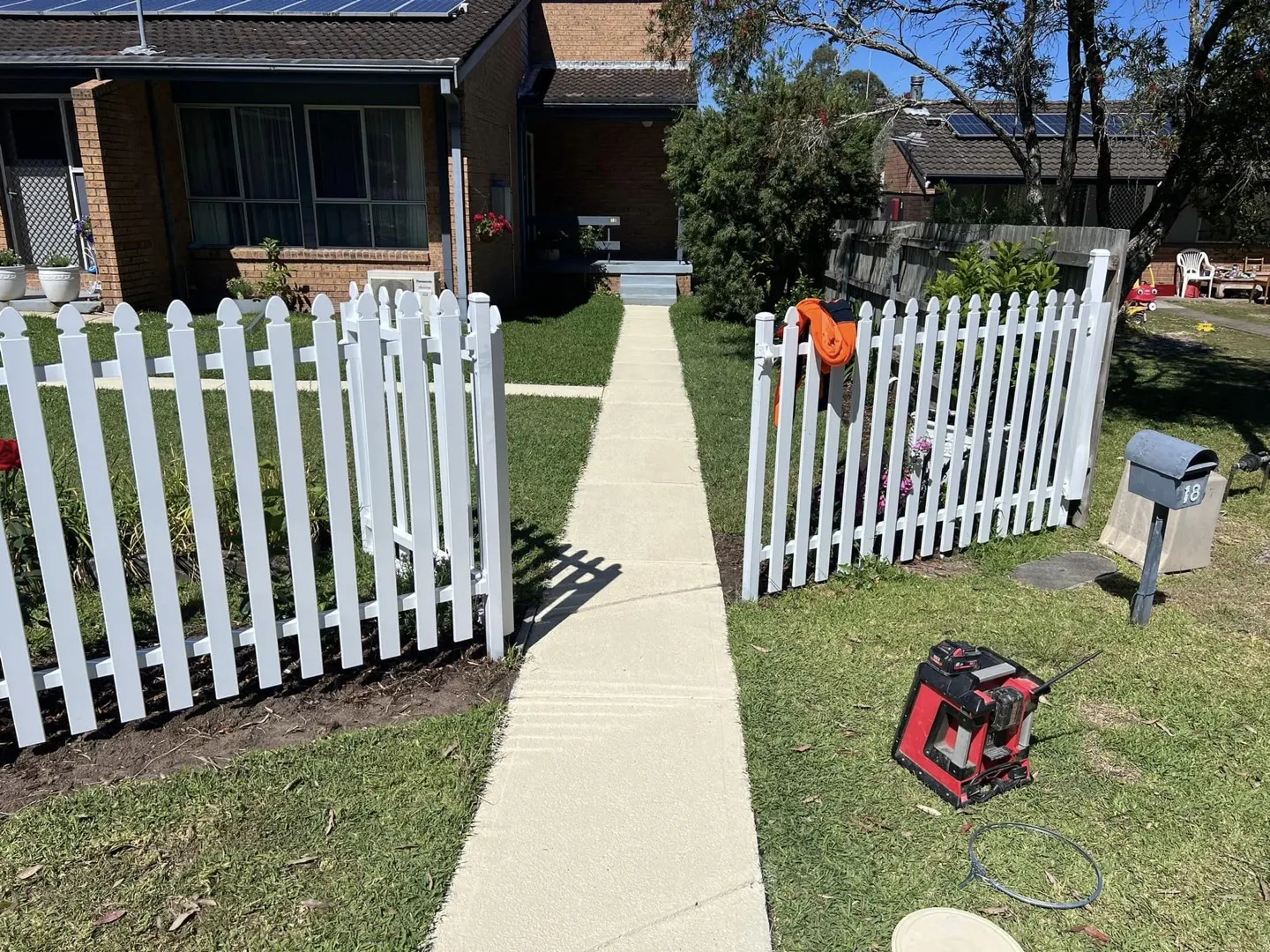
A path only has one job, get you from A to B without a trip hazard or a puddle. We set it out level, pour it to last, and finish it so it sits well with the house.
The job
Level, drained and built to stay that way
Paths look simple until one lifts on a tree root or pools water after rain. We set falls so water runs off where it should, form the edges straight, and finish the surface with the right amount of grip for the spot, front entries, side access, or a run down to the back shed.
Same as every job we do, we handle the whole thing ourselves, from marking it out to the final broom finish.
- Set out level and to fall, so water sheds instead of pooling
- Poured to a thickness that handles foot traffic without cracking early
- Finish chosen for grip and looks, not just whatever's quickest
Finishes
A finish that suits the path and the house
The same solid pathway underneath, the surface is where you set the character.
How it runs
Repairs too, not just new paths
Plenty of our pathway jobs are repairs, a section that's lifted on a root, a crack that's turned into a trip hazard, or an old path that just needs replacing before it gets worse. We'll look at whether a section can be cut out and repoured or whether the whole run needs to go, and quote it either way in writing before we start.
Weighing up concrete against pavers for a path? We've written up the trade-offs in plain terms: concrete vs pavers for pathways in Melbourne.
Related
Other services
Good to know
Concrete pathway questions
Why do concrete paths lift or crack near trees?
Tree roots looking for moisture will push up under a path over time, especially in reactive soils around Melbourne. We look at what's nearby when we set out a path and can adjust the base, depth or route to reduce the risk, though a tree right on the line is sometimes the thing that needs addressing, not the concrete.
How wide should a concrete path be?
A single-file side access path is usually enough for wheelie bins and foot traffic, while a front entry path or one that needs to fit two people comfortably wants more width. We'll talk through what the path needs to do before we set it out.
Can you repair just a section of a path instead of redoing the whole run?
Often, yes. If one section has lifted or cracked and the rest is sound, we can cut out and repour just that section and match the joint lines so it reads properly. If the whole path is old and failing in multiple spots, patch repairs stop making sense and a full repour is the better value.
What finish gives the best grip on a path?
Exposed aggregate and a broomed plain finish both give good underfoot grip in the wet, which matters more on paths than most people think about until someone slips. A smooth trowelled finish looks clean but isn't our pick for a path that gets rained on.
How do you stop water pooling on a path?
We set the path to fall so water runs off to where it should, a garden bed, drain or the lawn, rather than sitting flat. Pooling on an existing path is almost always a sign it was never given proper fall in the first place, and it's something we can usually fix with a resurface or a section repour.
Get it scoped
Get a firm price on your path
Tell us the rough length and where it's running. Joey or one of the crew comes out, looks at the ground and any trees nearby, and gives you a written quote before anything starts.