
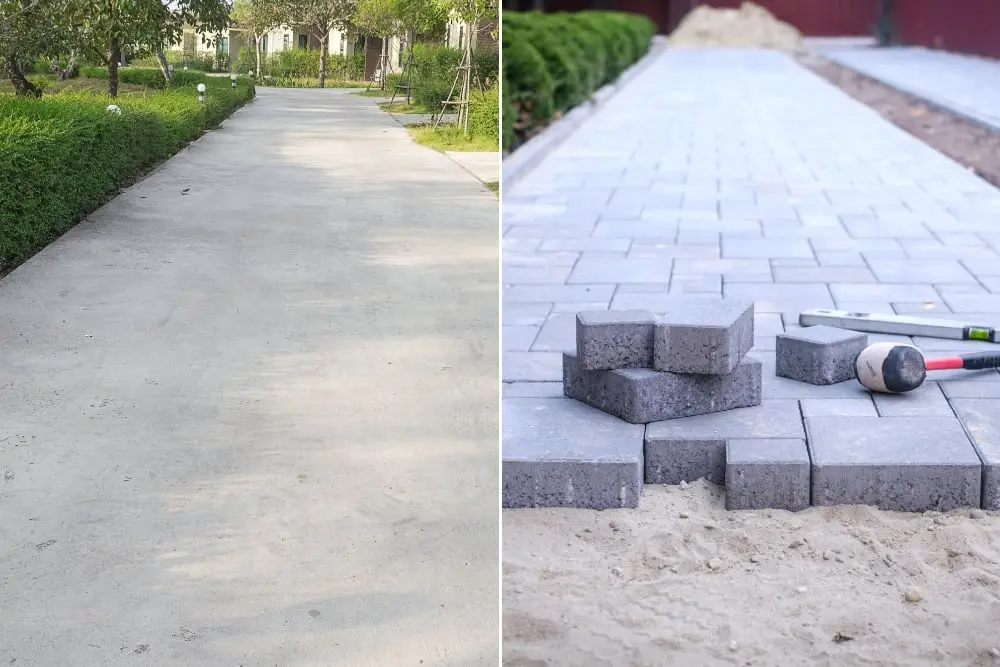
It is one of the most common questions we get asked before a pathway job. Both concrete and pavers are widely used across Melbourne and both can look genuinely good, but they perform differently, cost differently, and suit different homes and budgets. Here is how they actually compare.
The short version
Concrete is generally better value for straightforward paths and driveways where longevity and low upkeep matter most. Pavers offer more design flexibility and easier spot repairs, but cost more upfront and want more ongoing attention. Neither is the wrong answer, it depends on your budget, the look you want, and how much maintenance you are prepared to do.
Cost
Poured concrete is almost always cheaper to install than pavers. Standard brushed paths sit at the lower end, with decorative finishes like exposed aggregate or stencilled concrete costing more but still generally undercutting premium pavers. Paver installation runs higher across the board, concrete pavers at the lower end, natural bluestone or granite well above that, partly because each unit is laid individually on a prepared bed rather than poured as one surface. That gap narrows a little over time, since a damaged paver can be swapped without disturbing the rest, where a cracked slab needs patching or resurfacing over a wider area.
Melbourne's climate is the real decider
Melbourne swings from around 10 to 40 degrees within the same week more often than most Australian capitals, and concrete is a monolithic surface that expands and contracts as one piece. Properly placed control joints manage that movement well, but poorly jointed concrete will crack. Pavers, being individual units with gaps between them, flex with that movement more naturally, a genuine advantage in our conditions.
Many suburbs across Melbourne's south-east also sit on reactive clay that shrinks in dry summers and swells after rain. Both materials feel this, pavers tend to show it more visibly as units settle unevenly, while a well-prepared sub-base under either surface reduces the risk significantly regardless of what goes on top.
Correctly installed, both last 20 to 30 years. Pavers need the jointing sand replenished periodically and may need relevelling as units settle; concrete needs almost nothing structural but relies on that sealer being kept up.
Upkeep, and what happens when something goes wrong
Concrete asks for a pressure wash once or twice a year and a reseal every couple of years. If cracks or wear show up down the track, resurfacing restores the look without a full tear-out. Pavers need their jointing material topped up every few years as sand or mortar breaks down, otherwise weeds, insects and water work their way into the base. The flip side is repair, lift and replace an individual paver and the rest of the path is untouched, whereas a concrete patch rarely matches the surrounding colour and texture exactly. If you know a service trench will need to go through the path at some point, that flexibility is worth factoring in now.
Design and the look of the place
Concrete has come a long way, plain brushed, exposed aggregate, coloured oxide finishes and stencilled patterns that mimic brick, slate or stone are all achievable, but the design is locked in once poured. Pavers offer a wider range again, shapes, sizes, materials from basic concrete through to bluestone and clay brick, and patterns like herringbone or basketweave that are hard to replicate convincingly in concrete. They can also be lifted and relaid in a new layout later if the garden style changes.
Neither wins on resale by itself
What tends to matter more than the material is whether the surface looks cared for and suits the property. A sharp exposed aggregate path on a contemporary home reads better than tired, uneven pavers, and quality natural stone on a period home beats plain grey concrete. Fit matters more than the label.
Making the call
Choose concrete for lower upfront cost, minimal ongoing work and a clean result, particularly for straight paths, driveways and pool surrounds where a seamless surface makes sense. Choose pavers where design variety matters most, the property suits a traditional look, or you know the path may need to come up for services down the track. If you are genuinely torn, a site visit settles it fast, the shape of the path, the garden style and the state of the ground all point one way or the other.
Con Ops installs concrete pathways across Melbourne's south-east, including Clayton, Glen Waverley, Oakleigh, Mulgrave, Chadstone and Mount Waverley. Get in touch for a free quote and an honest read on which surface suits your place.