
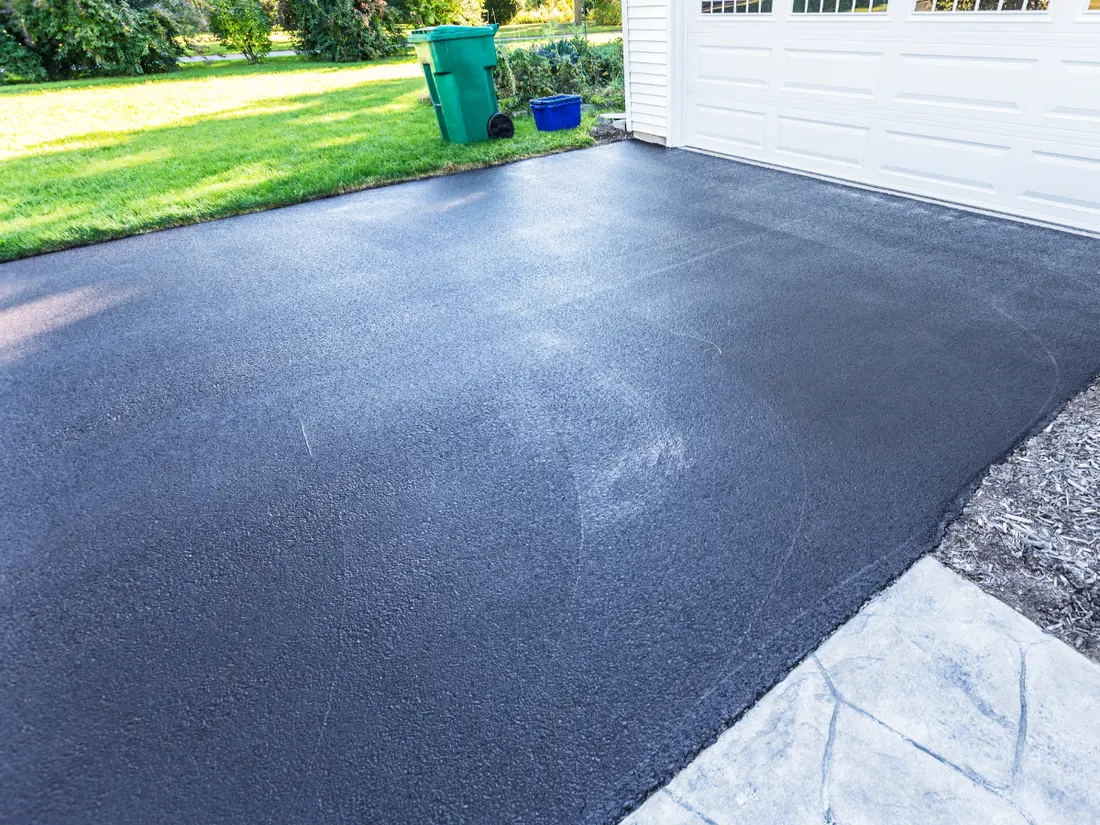
We get asked this a lot, usually from someone who's had a quote for both and wants to know which one actually holds up. Both materials do the job. The differences show up over time, not in the first year.
Durability and lifespan
A properly poured and reinforced concrete driveway is built for the long haul. With control joints in the right places and a solid base underneath, it resists cracking, sinking, and general wear far better than most alternatives. Asphalt is more forgiving to lay quickly but softens in hot weather and needs resurfacing well before concrete does, particularly under the weight of a loaded trailer or larger vehicle sitting in one spot.
What upkeep actually looks like
Asphalt needs sealing every few years to stop it drying out, cracking, and picking up oil stains it can't shed. Concrete is lower maintenance day to day. It can still develop hairline cracks over the years, and a reseal every so often keeps water and staining out, but you're not on the same cycle of resealing the whole surface that asphalt demands.
Appearance and design options
This is where concrete pulls ahead. You can choose a plain broom finish, exposed aggregate for texture and grip, or a coloured mix to match brickwork, render, or landscaping. Asphalt comes in one look: dark, uniform, and not really adjustable beyond that. If the driveway needs to work with the rest of the property's presentation, concrete gives you far more to work with.
Cost, short term and long term
Asphalt is usually cheaper to install, which is the main reason people consider it. Where concrete tends to win is over the life of the driveway. Because it needs less frequent resurfacing and holds up longer under load, the total cost over ten or twenty years often favours concrete, especially once you factor in the labour and disruption of resealing asphalt every few years.
Environmental considerations
Neither material is impact-free. Concrete production has a real carbon footprint, while asphalt relies on petroleum-based binders and needs more frequent re-application over its life. If this matters to your decision, it's worth weighing against how long each surface will actually last on your site and how often it will need redoing.
Which one suits your property
Concrete generally makes more sense where the driveway carries a lot of weight, where you want a specific look or colour, or where you're planning to stay in the property long enough for the lower running cost to pay off. Asphalt can suit a lower-budget job where appearance matters less and the surface will be replaced again within a decade or two regardless.
Weather and Melbourne conditions
Both materials have to cope with Melbourne's swings between hot dry spells and heavy winter rain. Concrete handles that range well when it's built with proper control joints and drainage falls, resisting the thermal expansion and contraction that comes with our seasonal extremes. Asphalt softens in sustained summer heat, particularly under a parked car or trailer sitting in the same spot day after day, and can become brittle and prone to cracking through a cold Melbourne winter if it isn't properly maintained.
A word on repairs
Concrete cracks are usually straightforward to seal or patch without it being obvious afterwards, especially with a matching finish. Asphalt patches tend to stand out as a slightly different shade and texture next to the original surface, and potholes can form quickly once water gets under a weak spot. Neither is a dealbreaker, but it's worth factoring into how the driveway will look a few years down the track.
The right answer depends on your site, your budget, and how long you're planning to keep the driveway as-is. We're happy to talk through both options honestly rather than just push the one we pour more of. Have a look at our concrete driveway work, or get in touch and we'll come out and give you a straight assessment.