
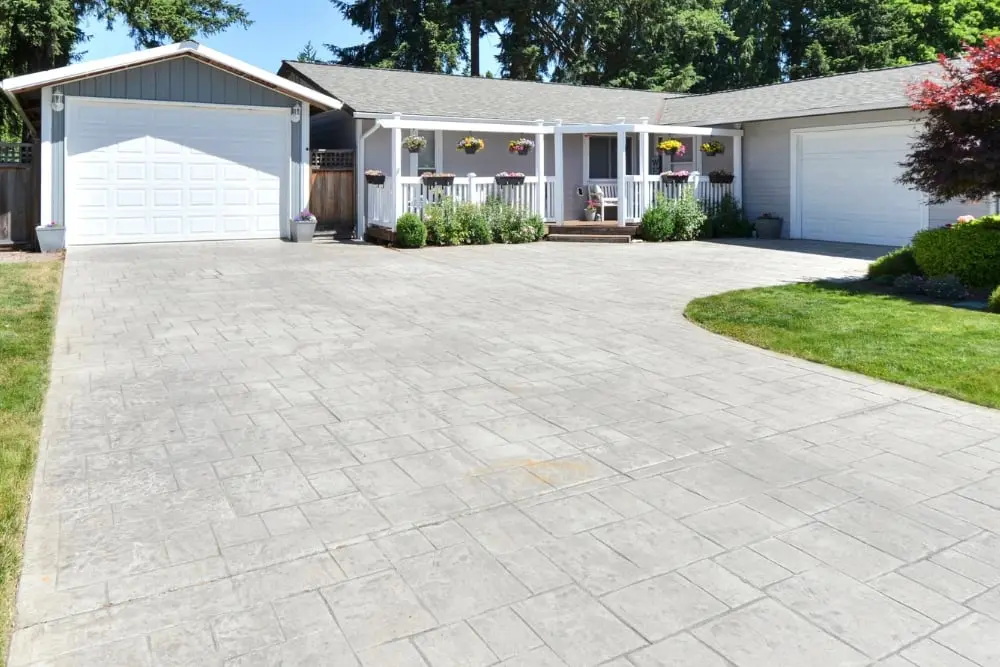
For most Melbourne homeowners, the answer is yes, at least for part of the driveway. Whether you need one permit or several depends on where the driveway meets the road and what's around it.
The crossover is what triggers the permit
A driveway has two sections. The part on your own property, from the garage to the front boundary, is generally yours to build without council sign-off. The part that crosses the nature strip, footpath, and kerb to meet the road, known as the vehicle crossing or crossover, sits on council-managed land.
Under the Road Management Act 2004 (Victoria), nobody can carry out works in a road reserve without the written consent of the road authority. For local streets, that's your council, and the mechanism for getting that consent is a Vehicle Crossing Permit. Building a new driveway, widening an existing one, or changing the crossover in any way all need this permit before work starts. We handle this process regularly across South-East Melbourne, more on that on our concrete driveways page.
What the permit covers
The Vehicle Crossing Permit is the standard approval for crossover work on a residential property, and every Melbourne council issues them, though the process varies slightly between councils.
- New crossover construction almost always needs a permit, including turning a grassed or gravel access point into a proper formed crossing.
- Modifying an existing crossover, whether widening, relocating, or changing materials, needs a permit because you're altering council infrastructure. Even a like-for-like replacement can require sign-off at some councils.
- Removing a redundant crossover usually means reinstating the kerb, channel, and nature strip to council specifications, which is its own permit.
When you need more than the standard permit
Most residential driveways only need the Vehicle Crossing Permit. A few situations need something extra first.
Heritage overlay properties need a planning permit before the Vehicle Crossing Permit, since driveway works can affect the character of a heritage streetscape. You can check whether an overlay applies to your property through the state government's VicPlan tool.
Properties fronting a declared arterial road, managed by the Department of Transport and Planning, need a planning permit under the planning scheme plus authorisation from the department. Most streets across South-East Melbourne's suburbs are council-managed local roads, so this rarely applies, but it's worth checking if you're near a main road.
How the process generally runs
The steps are broadly consistent across Melbourne councils, though fees and timeframes vary by council.
- Check your council's requirements and application form.
- Prepare a site plan showing the proposed crossing, its dimensions, and its distance from street trees or council assets.
- Submit the application and pay the fee, then allow time for assessment.
- A pre-pour inspection, booked in advance, checks the formwork before any concrete goes in.
- A final inspection, usually a few weeks after the pour, confirms the finished crossing meets council standards.
What happens if you skip it
Councils treat this seriously because the crossover is their infrastructure. A crossing built without approval can be ordered demolished, with the footpath, kerb, and channel reinstated at the owner's cost, and you can be held liable for any damage to council assets during the works. It's not a shortcut worth taking.
Working with a contractor who knows the area
A concreter who regularly works across a council area will already know its specific requirements, from pre-pour inspection booking to clearance distances from street trees. That local knowledge saves time and avoids the back-and-forth of a rejected application.
If you're planning a new driveway anywhere across Monash, Whitehorse, Kingston, Bayside, Glen Eira or the surrounding councils, get in touch and we'll walk you through what's needed for your property before we start.