
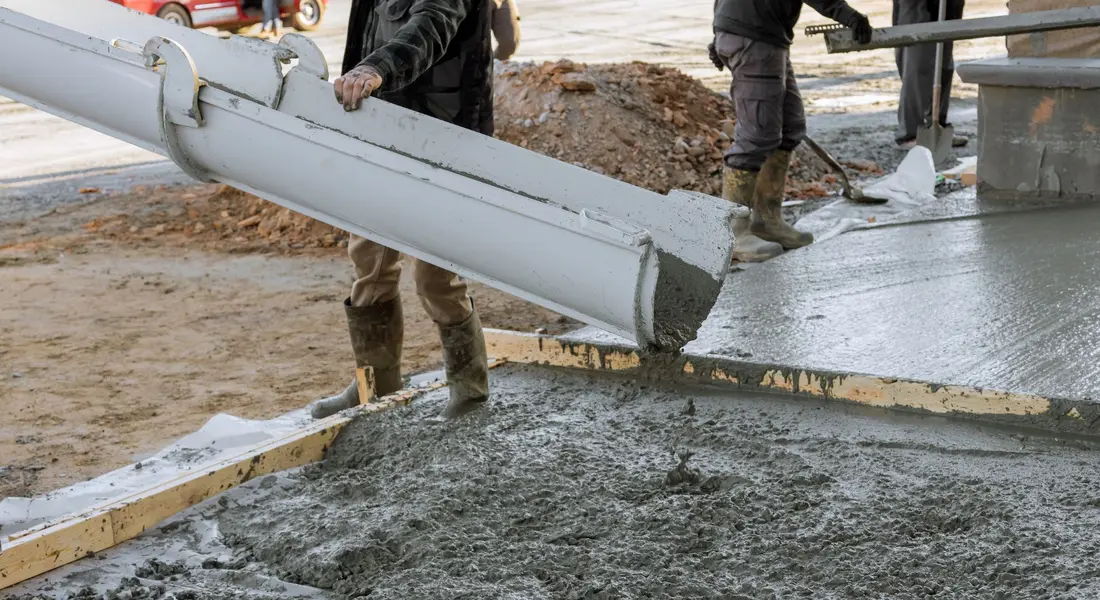
Concrete has been used in construction for thousands of years, from Roman structures still standing today to the slab under your car right now. For anyone taking on a DIY concrete job for the first time, whether it's a path, a small slab or a set of steps, understanding the basics makes the difference between a job that lasts and one that needs redoing.
What concrete actually is
Concrete is a mix of aggregate (sand and gravel), a binder (usually Portland cement) and water. Mixed together, the cement and water react chemically and bind the aggregate into a solid mass as it cures. The ratio of these ingredients, and how carefully they are measured, controls the strength and finish you end up with.
The main types you will come across
Normal strength concrete covers most general uses, paths, slabs, footings for smaller structures. High-strength concrete is used where load-bearing capacity matters more, structural columns or heavily trafficked areas. Lightweight concrete suits precast elements or insulation work where weight is a factor. Decorative concrete is enhanced with pigments, stamps or stains for a finished look, common on patios and driveways.
Mixing and pouring
Getting the mix right starts with measuring the aggregate, cement and water accurately rather than eyeballing it. A slightly off ratio changes the strength more than most people expect. Mix thoroughly, by machine for anything beyond a small job, until the consistency is uniform, then pour into formwork with even distribution and enough consolidation to work out air pockets. Air trapped in the pour is one of the more common reasons a slab weakens or cracks early.
Curing matters more than people think
Curing is where a lot of DIY pours go wrong. It is the process of keeping the concrete at the right moisture and temperature while it hardens, and rushing it undermines everything done up to that point. Cover the surface with plastic sheeting or wet hessian to hold moisture in, avoid big temperature swings while it cures, and give it at least seven days for normal strength concrete, longer for anything higher strength. Concrete poured in a Melbourne summer needs more attention to moisture loss than a cooler autumn pour.
Working safely
Wear gloves, safety glasses and a dust mask, cement dust and wet concrete both irritate skin and lungs more than people expect. Lift bags properly to avoid back injury, and follow the manufacturer's mixing and handling guidance rather than guessing based on a different product.
Where DIY makes sense, and where it does not
A small path, a garden edge or a simple slab is a reasonable DIY project if you take the time to get the mix, formwork and curing right. Anything load-bearing, a driveway, a garage floor, a foundation, is a different proposition. Concrete has a limited working time once mixed, and getting the levels, reinforcement and finish right within that window is genuinely difficult without experience. A pour that goes wrong usually has to be broken out and redone, which costs more than getting a professional in from the start.
Building on solid basics
Understanding composition, mixing and curing is the foundation for any concrete project, literally. Whether you're tackling something small yourself or planning a bigger job, that grounding helps you ask the right questions and spot a problem before it sets. If you are planning something beyond DIY scope, contact us and we will talk through what is actually involved for your project.