

Melbourne winters are not brutal on concrete the way a snowy climate is, but they are long, grey and wet. Surfaces that sit in shade barely dry out for months. Water finds its way into hairline cracks and sits there. Moss and algae take hold on the south side of the house, and leaf litter stains anything porous.
Spring is when all of that becomes visible, and September is a good time to walk around your place and look properly. Most of what you find will be small. Small is exactly when it is cheap to deal with, and it gives you time to get anything bigger sorted before summer, when everyone wants their driveway and patio looking right at once.
Start with a proper clean
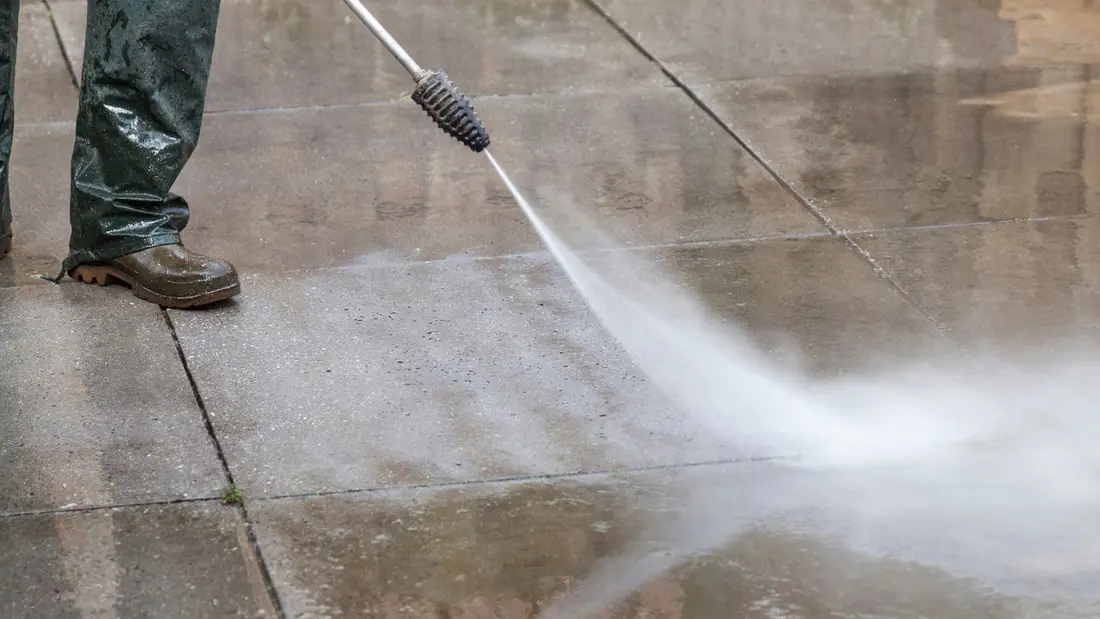
You cannot assess concrete you cannot see. A wash strips off the winter build-up of moss, algae, leaf tannin and general grime, and it usually reveals a surface in better shape than it looked.
If you are doing it yourself, keep the pressure sensible and the nozzle moving. A narrow tip held in one spot will etch the surface and leave permanent stripes, and a surface that has already lost its sealer marks up faster than you would expect. Work in overlapping passes, wet the area first, and rinse the residue away rather than letting it dry back onto the slab.
If the concrete is stained through rather than dirty on top, or it is a large driveway you would rather not spend a weekend on, we do pressure washing as a job on its own or as the prep step before sealing.
Watch where the water goes
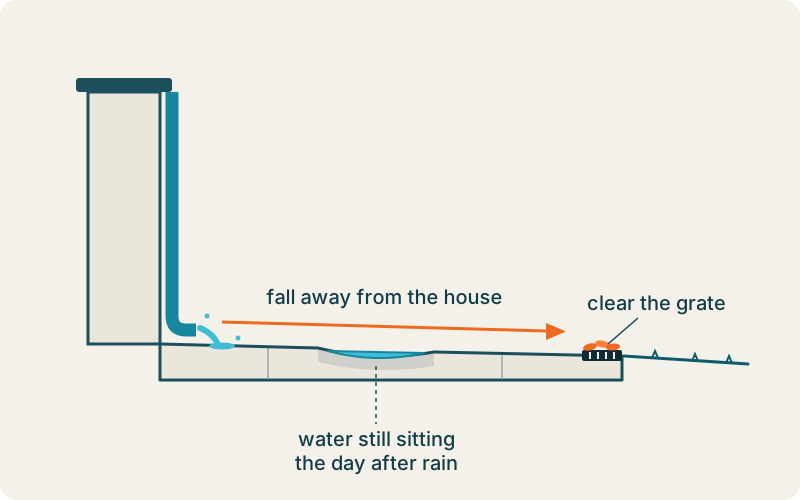
The next dry day after rain tells you more than any inspection. Look for the dark patches that are still damp when everything else has dried off. Those are the low spots, and they are where damage starts.
Then check the obvious causes: downpipes discharging straight onto the slab, garden beds that have built up above the concrete edge, drains and grates choked with winter leaf fall, and any point where water runs toward the house instead of away from it. Clearing a grate is a five minute job. Ignoring it for another year is how you end up with a slab that is undermined at one corner.
Read the cracks
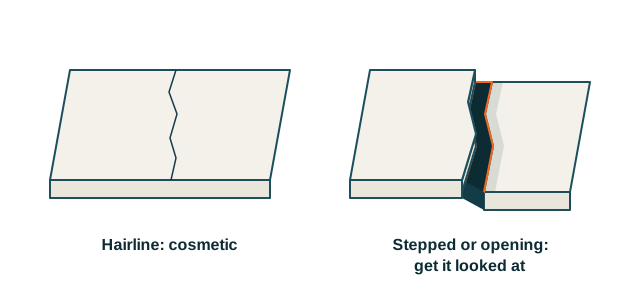
Every concrete surface gets fine cracks. What matters is which ones are telling you something.
Hairline cracks that you can barely catch a fingernail in are usually shrinkage from the original cure, and they are cosmetic. Worth sealing so water stays out, not worth losing sleep over.
Cracks wide enough to hold grit, cracks where one side sits higher than the other, and cracks that have visibly opened up over the winter are a different conversation. So is a crack that runs the full width of a driveway or continues up a step. Those are usually about what is happening under the slab, and patching the top of them fixes nothing.
Take a photo of anything that concerns you now, and take another in a couple of months. Movement you can see between two photos is the clearest evidence there is.
Flaking, pitting and spalling
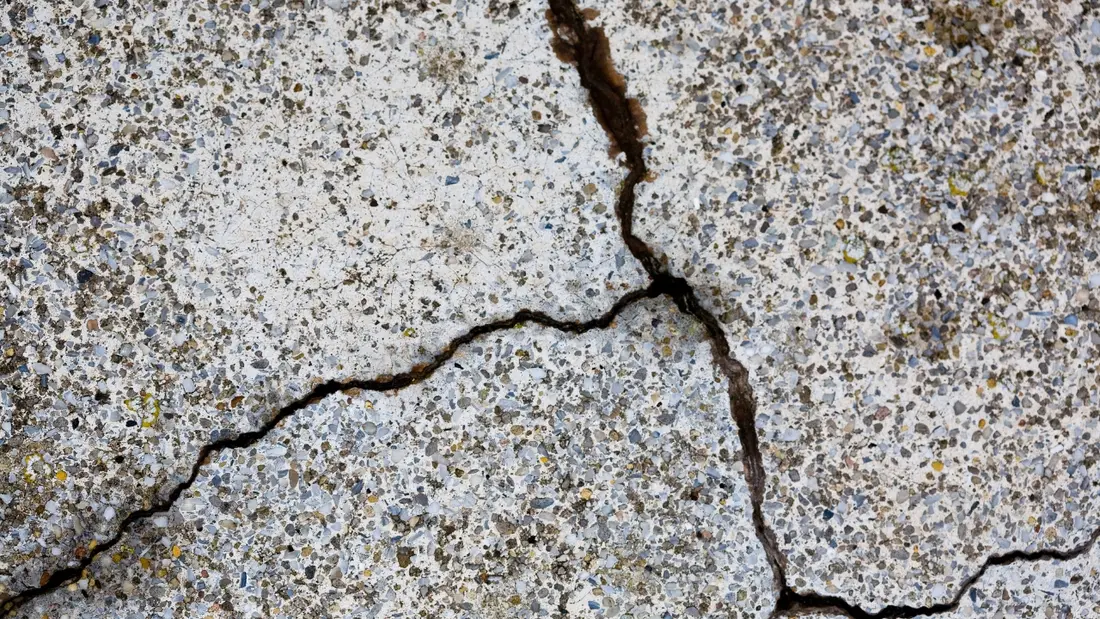
Concrete that has spent winter damp will show its weak spots in spring. Look for surfaces that feel gritty underfoot, small pits like the concrete has been peppered, or thin flakes lifting away in sheets. That is spalling, and it happens most often where a surface was over-finished, poorly cured or left unsealed.
Caught early, spalling is a surface problem and stays one. Left to spread, it reaches the reinforcement and becomes a structural repair. We cover why it happens and what actually fixes it in our guide to driveway spalling repair.
Check the seal
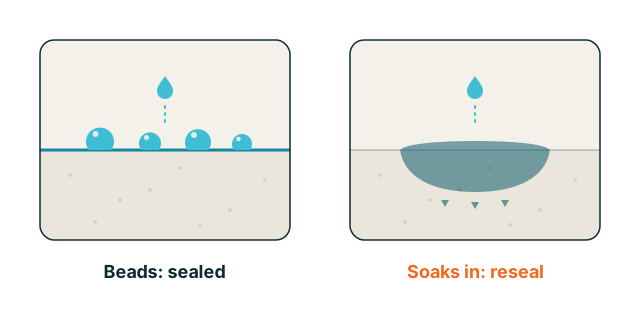
Tip a cup of water onto a few spots on the driveway or patio. If it beads and sits, the sealer is doing its job. If it soaks straight in and leaves a dark patch, the surface is unprotected, which is the state most concrete around here is in by the end of winter.
Resealing is the single cheapest thing you can do for outdoor concrete. It keeps water, oil and tannin out of the surface, it makes the next clean easier, and it holds the colour. Spring suits the job because the concrete needs to be genuinely dry and the temperature reasonable, which rules out most of winter. We do colour and clear re-sealing, matched to how much sun and chlorine the surface actually cops.
Look at the edges, joints and what is growing nearby
Control joints do their work by letting the slab move. If they are packed with grit and moss, they cannot. Clear them out and re-fill anything that has lost its filler.
Check the edges of paths and driveways for crumbling, and check what is growing beside them. A tree that was small when the path went in is a tree with roots under the path now, and lifted, tripping slabs almost always start there. Same with garden beds sitting hard against the concrete, holding moisture against the edge all winter.
Pool and spa surrounds get their own check
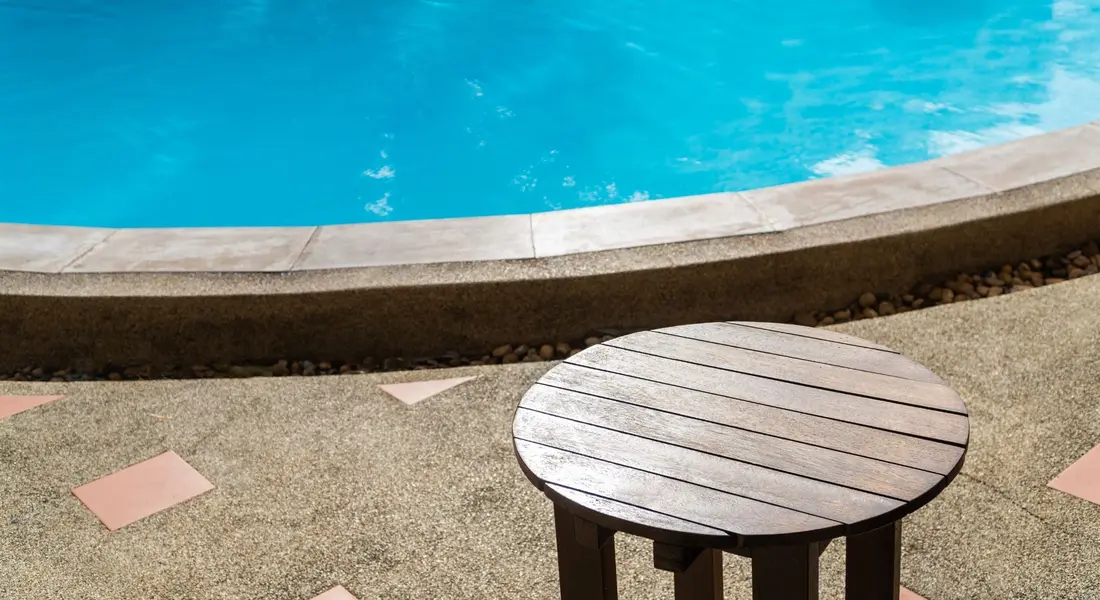
Pool surrounds spend winter wet, shaded and unused, which is exactly what algae wants. The surface can be genuinely slippery by September even when it looks clean, so check it barefoot and wet before the family does in December.
While you are there, look at the coping and the joint between the surround and the pool shell for cracking or movement, and look for any section that has dropped or lifted. Around a pool, a small level change is a trip hazard rather than a cosmetic fault.
What is worth booking now rather than in December
Cleaning and sealing need dry concrete and settled weather, and resurfacing needs both plus time to cure. Spring gives you that window. Summer gives you a queue.
If your walk around turns up flaking across a large area, a surface that has gone rough and porous all over, or a patio you have stopped using because of how it looks, resurfacing is usually the fix, and it costs a lot less than replacing the slab. If the problems are structural, cracks with movement, a corner that has dropped, a section that ponds every time it rains, that wants looking at properly before anything goes over the top of it.
The short version
- Wash it, so you can actually see the surface
- Check where water sits the day after rain, and clear the drains and downpipes
- Photograph any crack you are unsure about, and compare in two months
- Feel for grit, pitting and flaking, especially in shaded areas
- Splash-test the sealer, and reseal if the water soaks in
- Clear the control joints and check the edges and nearby roots
- Test the pool surround for slip before summer
Most of this is a ten minute walk with a hose and your phone. If something on that list looks worse than a weekend job, send us a photo or give us a call on 1800 266 677. Joey or one of the crew comes out, looks at the slab, and puts a firm price in writing before anything starts.