
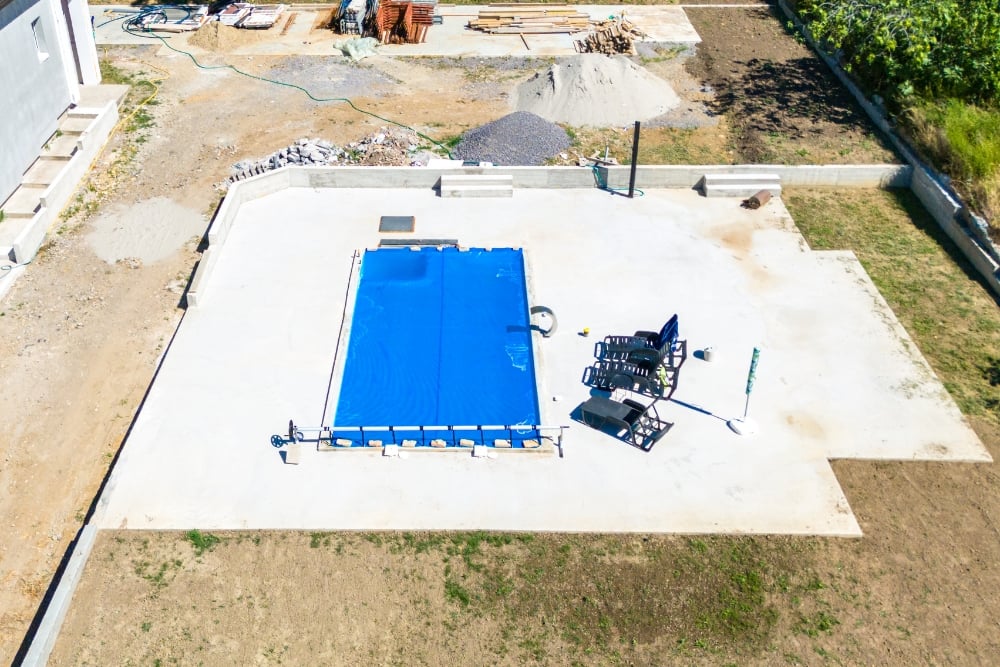
Honed concrete has become the go-to pool surround finish for Melbourne homeowners who want something that looks sharp, stays safe underfoot, and holds up to Australian summers without becoming a hot plate by 2pm.
It’s not the only option, and it’s not right for every pool. But for a lot of South-East Melbourne homes, particularly those with a clean, modern aesthetic, it’s hard to beat. Here’s what you need to know before committing: what honed concrete is, how it handles Melbourne’s climate, what it costs, and how it compares to the other finishes on the market.
What Is Honed Concrete?
Honed concrete starts the same way as any other concrete pour. What sets it apart is what happens after the slab cures. The surface is mechanically ground down using diamond tooling, which removes the rough cement paste on top and creates a smooth, flat, matte finish. Depending on how many grinding passes are done and the aggregate mix used, you can end up with anything from a fine stone-like surface to one where the aggregate is clearly visible beneath a smooth top.
It’s sometimes confused with polished concrete, which goes much further, using progressively finer grits to achieve a gloss finish. Honed stops well short of that. The result is a surface that looks refined and modern without the mirror-like sheen that makes polished concrete inappropriate outdoors.
Con Ops installs honed concrete pool surrounds across South-East Melbourne, alongside liquid limestone, exposed aggregate, and coloured concrete options. More detail on all of these is on our pool surrounds page.
Slip Resistance: The Question Everyone Should Ask
This is the most important technical question for any pool surround material, and it’s worth understanding how honed concrete achieves slip resistance, because it’s different from what you might expect.
The honed surface itself is smooth. Unlike exposed aggregate, which grips through texture, honed concrete relies on the sealer applied over the top to deliver grip. A quality anti-slip sealer contains fine silica particles that create traction even when the surface is wet. The Australian standard for slip resistance is AS 4586, and a properly specified and sealed honed surface should meet a P4 or P5 rating for pool surrounds, which is appropriate for wet pedestrian areas.
What this means in practice: the sealer does a lot of work, and keeping up with resealing is more important with honed concrete than with exposed aggregate. A worn sealer on a honed surface becomes slippery. A worn sealer on exposed aggregate still has some texture to fall back on.
For families with young children, this is worth factoring into the decision. Honed concrete is safe when properly installed and maintained. It just needs that maintenance to stay that way.
How Honed Concrete Handles Melbourne’s Climate
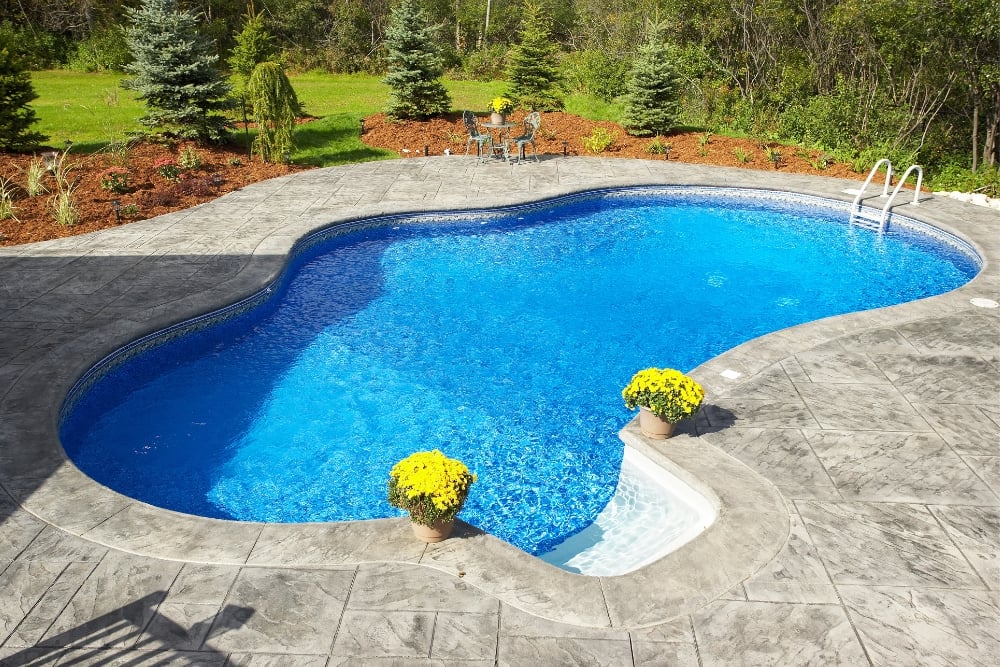
Melbourne’s summers are harder on pool surrounds than most people account for. A 40-degree day in Oakleigh or Glen Waverley puts a concrete surface under real stress, and by mid-afternoon, certain finishes can be painful to walk on barefoot.
Heat retention
Honed concrete absorbs and retains heat, but it performs noticeably better than exposed aggregate in direct sun. The smooth, closed surface reflects a little more heat and releases it more slowly. The single most effective thing you can do is choose a lighter colour. Pale grey, off-white, and warm sand tones stay significantly cooler than charcoal or dark anthracite. Dark-coloured concrete in full Melbourne sun can be uncomfortable by midday, regardless of the finish.
If heat is your primary concern, liquid limestone is the cooler performer. But for a modern aesthetic where honed concrete fits the design better, a light tone is a practical compromise.
Temperature cycling
Melbourne’s temperature swings, including warm days and cool nights through spring and autumn, create constant expansion and contraction in any outdoor concrete slab. Properly installed honed concrete handles this well. Expansion joints placed correctly during installation are the key variable. Without them, that movement will find a crack somewhere instead.
Chlorine and pool chemical exposure
Pool water splashed repeatedly onto the surround, combined with UV exposure, will degrade an unsealed or poorly sealed surface over time. A UV-stable, penetrating sealer is essential for honed concrete around pools. Surface sealers that sit on top of the concrete wear off faster and need replacing more frequently than penetrating options that absorb into the slab.
What Does Honed Concrete Cost for Pool Surrounds in Melbourne?
Honed concrete sits in the mid-to-upper range of concrete finishes. In Melbourne, expect to pay roughly $120 to $160 per m2 installed for a residential pool surround. The variation within that range comes down to a few factors.
Size of the area
Most contractors have a minimum job size or charge. Smaller surrounds cost more per m2 because the setup, grinding equipment, and finishing time don’t scale down proportionally.
Aggregate mix and colour
Standard grey honed concrete sits at the lower end. Custom aggregate mixes with coloured oxide pigments, or mixes incorporating specific stone types, cost more. The more complex the aggregate specification, the higher the price.
Existing concrete condition
If you’re resurfacing or honing an existing slab rather than pouring new concrete, the condition of the existing surface matters. An uneven or damaged slab requires more grinding passes to achieve a consistent finish, which takes more time.
Sealing specification
A basic sealer is included in most quotes. A high-performance UV-stable penetrating sealer with anti-slip additive costs more but is worth the investment for a poolside application. Worth asking about specifically when getting quotes.
How Honed Concrete Compares to Other Pool Surround Finishes
| Honed concrete | Exposed aggregate | Liquid limestone | Coloured concrete | |
| Approx. cost (m2) | $120-$160 | $100-$140 | $110-$150 | $90-$130 |
| Appearance | Smooth, matte, modern | Textured, natural stone look | Smooth, earthy, seamless | Smooth, customisable colour |
| Slip resistance | Sealer-dependent (P4/P5 when correct) | High (natural texture) | Good (natural grip) | Sealer-dependent |
| Heat in direct sun | Moderate – colour-dependent | Higher – texture traps heat | Coolest option | Moderate – colour-dependent |
| Maintenance | Reseal every 3-4 years | Reseal every 3-5 years | Reseal every 2-4 years | Reseal every 3-5 years |
| Best suited to | Modern/contemporary homes | Natural/coastal landscaping | Light, freeform pool designs | Matching existing palette |
What to Expect During Installation
Understanding the process helps you plan realistically around the work, particularly the curing time, which catches people off guard.
Site preparation and pour
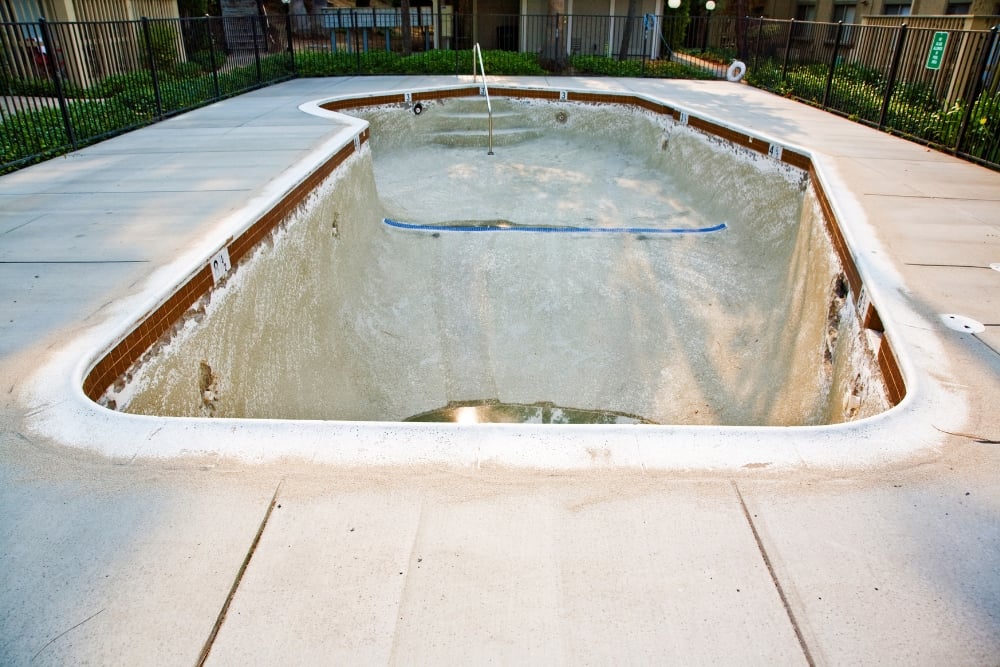
For a new surround, the ground is excavated and prepared, formwork is set, reinforcement steel is placed, and concrete is poured. The concrete mix used for honed applications needs to be at a higher strength than standard, because it must withstand the grinding process without degrading.
Curing
This is the part people are often surprised by. The slab needs to cure for a minimum of 28 days before grinding can start. Grinding too early risks surface damage and an inconsistent finish. The pool area will be out of action during this period.
Grinding and honing
Once the slab has cured, diamond grinding equipment is used to progressively work down the surface. Multiple passes at different grits achieve the final smoothness. The number of passes determines the depth of aggregate exposure and the closeness of the finish to polished concrete.
Sealing
The finished surface is cleaned, allowed to dry fully, and then sealed. Many installers recommend a first reseal at 12 months, once the slab has gone through its first full season. After that, every three to four years is typical for a pool surround application.
Is Honed Concrete the Right Choice for Your Pool?
Honed concrete suits Melbourne homes well when the aesthetic is contemporary and the pool design is clean and geometric. It reads as intentional and considered rather than decorative, which works well with modern architecture, rendered homes, and landscaping that favours structure over texture.
It’s probably not the first choice if heat underfoot in full sun is your main concern, because liquid limestone is the practical winner on that front. And if your pool area has young kids running and jumping constantly on a wet surface, exposed aggregate’s natural texture provides a bit more inherent grip with less dependence on sealer condition.
But if you’ve seen honed concrete at a house or showroom and it’s the look you want, it’s a legitimate and durable choice for pool surrounds. The key is making sure the installation is done correctly and that you commit to the resealing schedule.
Get a Quote for Your Pool Surround
Con Ops installs honed concrete, liquid limestone, exposed aggregate, and coloured concrete pool surrounds across South-East Melbourne. We’re based in Clayton and work across Glen Waverley, Mount Waverley, Oakleigh, Mulgrave, Chadstone, and surrounding suburbs.
Contact us today for a free quote. Call 1800 266 677 or send us a message online. We can walk you through the finish options and, if you’d like, arrange for you to see samples before you commit.
Frequently Asked Questions
How long does honed concrete last around a pool?
A well-installed honed concrete pool surround should last 30 years or more. The surface itself is very durable. The variable is the sealer, which needs refreshing every three to four years to maintain both appearance and slip resistance.
Can honed concrete be slippery when wet?
It can be, if the sealer is worn or if a standard (non-anti-slip) sealer was used. A properly specified honed pool surround uses a sealer containing silica particles that maintain grip on a wet surface. Ask your installer specifically about the slip rating of the sealer they intend to use. For pool surrounds, it should meet AS 4586 P4 or P5.
What colour works best in Melbourne’s summer heat?
Lighter colours absorb less heat and stay more comfortable underfoot. Pale grey, off-white, and light sand tones are the most practical choices. Dark charcoal or near-black honed concrete can become very hot in Melbourne’s summer sun and is better suited to shaded areas or climates with less intense heat.
Can honed concrete be applied over an existing concrete slab?
Sometimes, yes. It depends on the condition and thickness of the existing slab. If the surface is reasonably flat, undamaged, and thick enough to accommodate grinding, it may be possible to hone rather than replace. An inspection of the existing concrete is needed to determine this. Con Ops can assess this during a site visit.
What’s the difference between honed concrete and polished concrete?
Both are ground concrete surfaces, but polished goes much further, using progressively finer diamond grits to achieve a high-gloss, reflective finish. Polished concrete is generally not appropriate outdoors because the gloss finish becomes very slippery when wet. Honed concrete stops at a matte finish, which is safer for outdoor use and far more practical around a pool.