
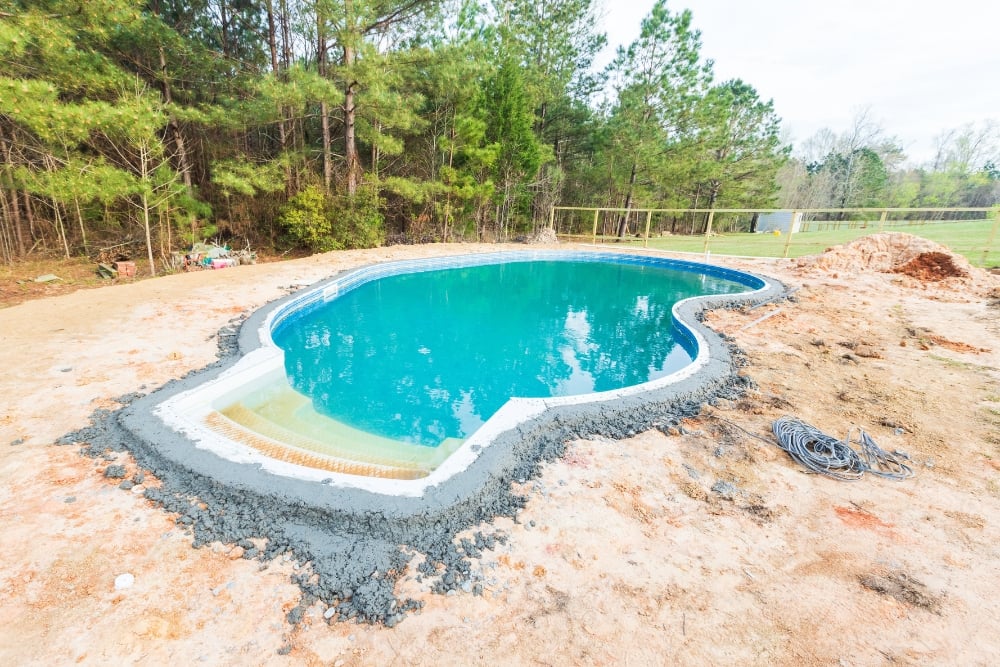
If you’ve ever noticed a thickened band of concrete running around the top edge of a concrete pool, you’ve already seen a bond beam. Most pool owners don’t think about it until something goes wrong. But the bond beam is one of the most structurally important parts of the pool, and understanding what it does helps you recognise when it needs attention before a minor problem becomes a major one.
What is a Pool Bond Beam?
A pool bond beam is a reinforced concrete beam that runs around the full perimeter of the pool at the top of the pool shell. It’s essentially a structural ring that ties the pool walls together and prevents them from spreading outward under the pressure of the water inside.
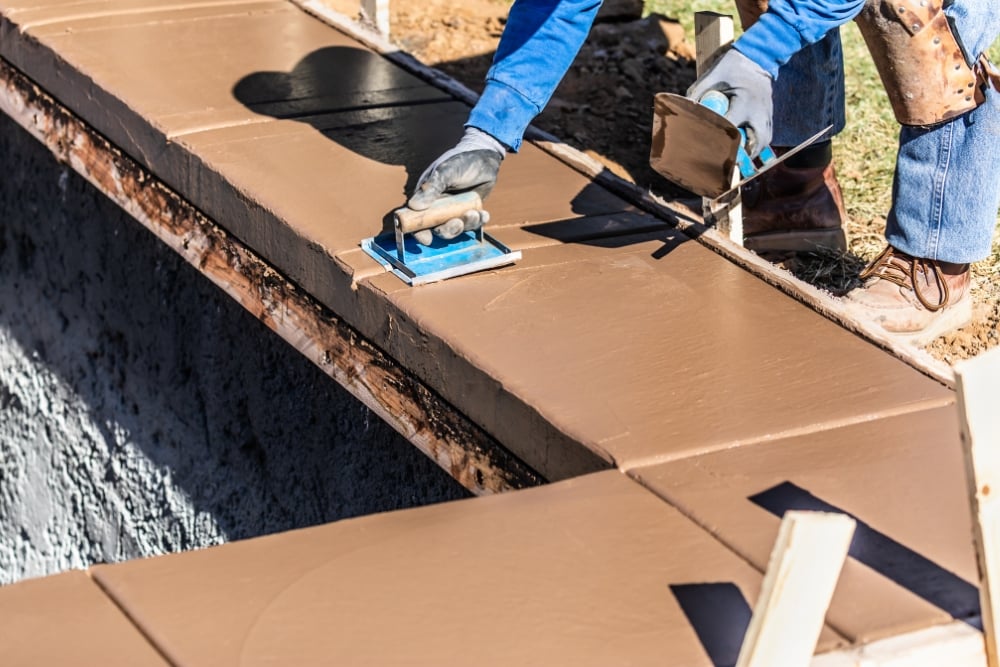
The beam is wider and deeper than the pool walls themselves, typically 200 to 300mm wide and reinforced with steel rebar. In most in-ground pools, it sits just below the coping level and is concealed once the surround and coping are installed. You’re walking over it every time you walk around the edge of your pool.
Concrete pools can’t function without one. Without a bond beam, the walls would have no structural connection at the top and would gradually push outward over time under constant hydrostatic pressure.
What Does a Bond Beam Actually Do?
The bond beam does three things that matter to the long-term health of your pool.
It holds the pool shell together
Water pressure pushes outward in all directions at once. The pool walls are designed to resist that pressure vertically, but they need something at the top to prevent them from spreading. The bond beam acts as a compression ring, keeping the walls locked in position relative to each other regardless of what the water is doing inside.
It distributes load evenly
The weight of the water, the surrounding soil, and foot traffic on the pool surround all create forces that the pool structure needs to handle. The bond beam spreads those loads around the perimeter rather than concentrating them at any single point. This is why pools with compromised bond beams tend to show cracking in predictable locations, usually where the beam has failed and load distribution has broken down.
It anchors the coping and surround
The coping tiles or stones that sit at the pool’s edge are bedded onto the bond beam. The pool surround concrete is poured against it. Without a solid bond beam underneath, coping lifts, surround concrete cracks, and the pool edge starts to look and feel unstable. What looks like a cosmetic problem on the surface is often a bond beam issue underneath.
Signs Your Bond Beam May Be Damaged
Bond beams don’t fail overnight. The signs usually develop gradually and catching them early makes repair significantly simpler and cheaper.
- Cracking along the pool’s upper edge, particularly horizontal cracks running around the waterline
- Coping tiles lifting, rocking, or coming loose without an obvious cause
- The pool surrounds concrete is cracking close to the pool edge
- Visible crumbling or spalling in the concrete around the pool perimeter
- Water loss that isn’t explained by evaporation or splash-out
In Melbourne, where ground movement from clay soils is common, bond beam damage is often linked to seasonal soil shrinkage and swelling rather than age alone. A pool that sits on reactive clay can experience repeated cycles of movement that stress the bond beam even if the pool is relatively new.
Repair vs. Replacement: What’s Involved?
Bond beam repair
If the damage is localised, a section repair is usually the right approach. The process involves removing the damaged concrete back to solid material and exposing the existing reinforcement. Where the rebar is corroded or missing, new steel is placed. High-strength concrete is then poured to rebuild the section, cured properly, and sealed.
Coping and any affected surround concrete are reinstated after the beam has cured. A repair done correctly is structurally equivalent to the original beam and should last the life of the pool.
Full bond beam replacement
Where the beam has deteriorated around most or all of the pool perimeter, a full replacement makes more sense than patching multiple sections. This is a more involved job: the coping and surround are removed, the old beam is broken out and replaced with new reinforced concrete, and the surround and coping are reinstalled once the new beam has cured.
It’s disruptive, but a fully replaced bond beam gives you a pool that’s structurally sound from scratch rather than a series of patches that may need attention again in a few years.
How urgent is it?
A damaged bond beam should be assessed and repaired promptly. The structural role it plays means that allowing deterioration to continue puts the whole pool shell at risk. What starts as a cracked section can progress to wall movement, major cracking through the pool shell, and eventually a pool that can’t hold water. The repair cost at that point is significantly higher than addressing the bond beam early.
Bond Beam Installation for New Pools
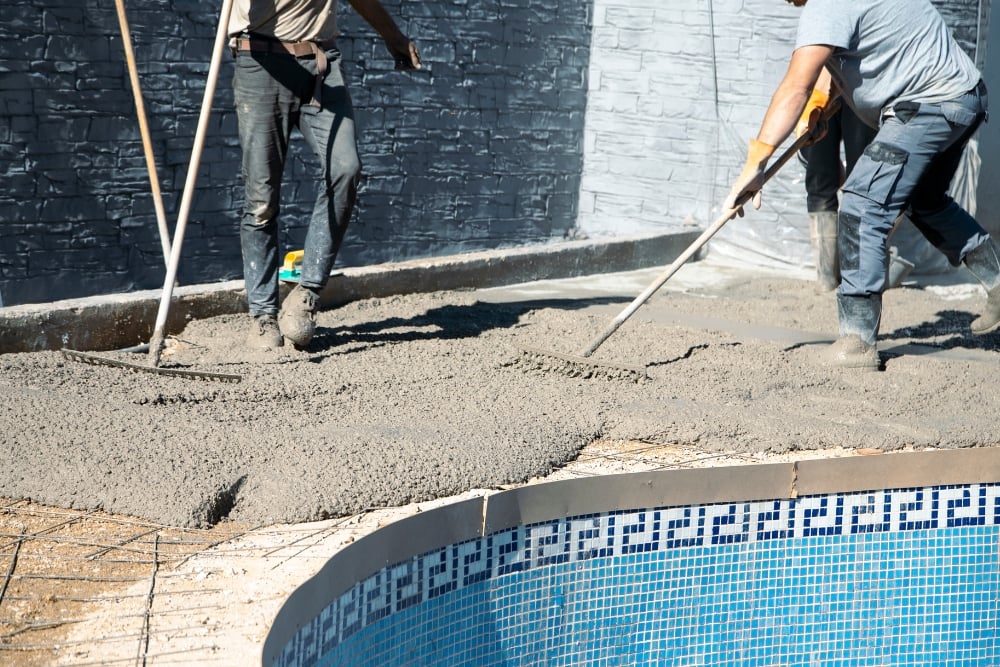
For new pool builds or major renovations, bond beam installation requires the right reinforcement from the start. The rebar needs to be correctly sized, lapped, and positioned within the beam so it forms a continuous structural ring. The concrete mix needs to be appropriate for permanent water contact and soil conditions.
Getting this right at the build stage is far less expensive than repairing it later. A pool concreter with experience in pool structures will specify the beam correctly and ensure it’s poured as a single continuous pour around the perimeter rather than in sections that could create cold joints.
Get a Quote for Bond Beam Repair in Melbourne
Con Ops repairs and installs pool bond beams across Melbourne’s south-east, including Clayton, Glen Waverley, Oakleigh, Mulgrave, Chadstone, and Mount Waverley. Find out more about our concrete pool surround and bond beam services, or call 1800 266 677 to arrange a site assessment.
Frequently Asked Questions
How long does a pool bond beam last?
A well-constructed bond beam in good soil conditions should last the life of the pool, often 30 to 40 years or more. Reactive clay soils, poor original construction, or corrosion of the internal rebar can shorten that significantly. Regular inspection of the coping and pool edge is the best way to catch any deterioration early.
Can I repair a bond beam myself?
Not reliably. Bond beam repair involves structural concrete work with steel reinforcement. Patching with a surface filler won’t restore the structural integrity of the beam and will fail again quickly. This is a job for an experienced concreter who understands pool structures.
How much does bond beam repair cost?
A localised section repair typically runs $500 to $1,500 depending on the extent of damage and whether coping needs to be removed and reinstated. A full perimeter replacement is a larger job and priced individually based on pool size and access. A site visit is the only reliable way to give an accurate figure.
Does bond beam damage affect pool safety?
Yes. A structurally compromised bond beam can lead to wall movement and pool shell cracking, which poses a risk to pool users if it progresses. It can also create sharp edges or unstable coping that are a hazard at the pool edge. If you suspect bond beam damage, have it assessed before continuing to use the pool heavily.
What is the difference between a bond beam and coping?
The bond beam is the structural reinforced concrete beam embedded in the pool shell at the top of the walls. Coping is the finishing material, typically tiles, natural stone, or precast concrete, that sits on top of the bond beam and forms the visible edge of the pool. The coping is cosmetic and functional; the bond beam is structural. Damage to the coping often points to a problem with the bond beam underneath.
If the area around your pool is also showing wear, our concrete pool surround resurfacing service can restore the surface at the same time as any bond beam work, saving you the cost of two separate mobilisations.