
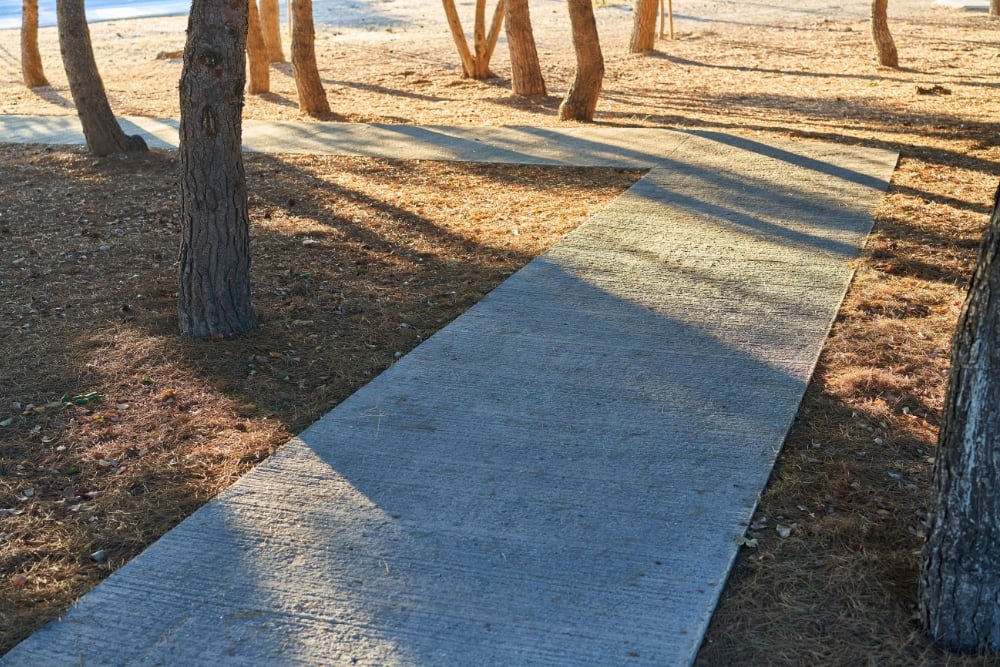
A well-laid concrete path does more than connect two points in a garden. It changes how a property looks, how it drains, and how safely people can move around it. Whether you’re planning a side path down the house, a footpath from the street to your front door, or a backyard walkway connecting the entertaining area to the garage, concrete is one of the most durable and cost-effective options available.
Here’s what to know about concrete path design, finish options, what it costs in Melbourne, and how the installation process works.
Why Concrete Is a Practical Choice for Paths in Melbourne
Concrete handles Melbourne’s climate well. The city’s temperature swings, from genuinely hot summers to cold, wet winters, can be hard on surfaces that shift or absorb water. Concrete stays stable, doesn’t warp, doesn’t rot, and doesn’t need replacing every few years the way some alternatives do.
It’s also low maintenance once it’s down. A sealed concrete path resists staining, weed growth through the surface, and the general wear that comes from foot traffic and garden activity. Compared to pavers, there are no individual units to settle unevenly or sand joints to wash out. Compared to gravel, there’s no tracking into the house after rain.
For a straight path job with good access, it’s also generally more affordable per metre than most paving options.
Types of Concrete Paths
Standard brushed concrete
The most common finish for residential paths. The surface is brushed while still wet to create fine parallel lines that provide grip underfoot. It’s practical, reasonably priced, and suits almost any backyard style. The texture is subtle enough that it doesn’t draw attention to itself.
Exposed aggregate
The top layer of cement paste is removed while the concrete is still workable to reveal the stone aggregate below. The result is a textured, natural-looking surface with good slip resistance. Exposed aggregate works particularly well in gardens with landscaping because the stone tones tie in with natural materials. It costs more than brushed concrete, but the finish lasts well and looks good for decades.
Coloured concrete
Oxide pigments are added to the concrete mix before pouring to produce a consistent colour throughout. Common choices in Melbourne include charcoal, slate grey, sandstone, and terracotta tones. Coloured concrete is a good option if you want the path to complement or contrast with the house or landscaping without committing to a decorative pattern.
Stencilled and patterned concrete
A stencil is laid over the freshly poured surface and a coloured hardener is applied to create the appearance of pavers, tiles, or stone. The result is decorative without the cost and movement risk of actual pavers. It suits front entries and entertaining areas as much as garden paths. The finish requires sealing and periodic re-sealing to maintain its appearance.
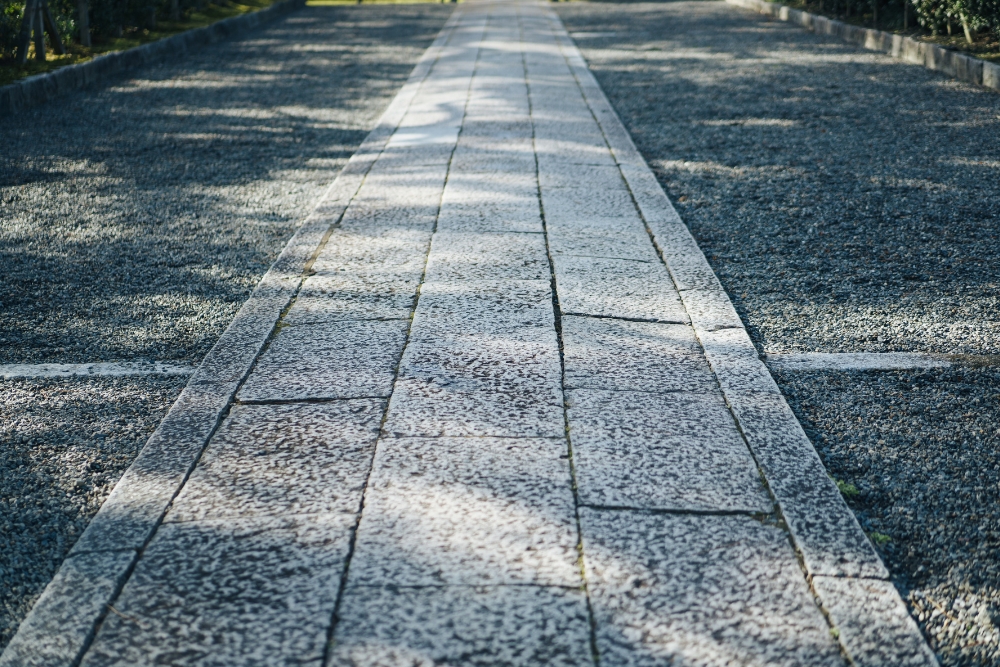
Concrete Path Design Tips
Width is the first decision. A single-person path is typically 900mm to 1,000mm wide. A path designed for two people to pass comfortably, or for wheelbarrow access, should be at least 1,200mm. Front entries often look better at 1,200mm or wider.
Curves add interest but add cost. Curved formwork takes longer to set up than straight runs, and the concrete needs to be poured and finished more carefully to avoid cracking on the inside radius. If the budget is tight, a path with a single gentle bend is achievable without much premium. Multiple tight curves will push the price up.
Falls matter more than most people realise. Concrete paths should be laid with a slight cross-fall, typically 1 in 40, so water drains off rather than pooling on the surface or running toward the house. On paths alongside the house, the fall should drain away from the structure. A good concreter will grade this correctly as part of the job.
Control joints prevent random cracking. Concrete shrinks slightly as it cures. Control joints, the lines cut or tooled into the surface every 1.5 to 2.5 metres, create a planned weak point where that movement can occur without cracking the slab randomly. They’re a standard part of any quality path job, not an optional extra.
Concrete Path Cost in Melbourne
Path pricing in Melbourne is generally quoted per linear metre for standard widths, or per m2 for wider areas. The figures below are guide rates for residential work in Melbourne’s south-east.
| Path type | Rate (per m2) | Typical job total | Notes |
| Brushed concrete (900mm wide) | $55 – $80 | $600 – $2,000+ | Depends on length and access |
| Exposed aggregate | $80 – $120 | $900 – $3,000+ | Stone type affects price |
| Coloured concrete | $70 – $110 | $800 – $2,500+ | Oxide pigment and sealing included |
| Stencilled / patterned | $90 – $140 | $1,000 – $3,500+ | Design complexity varies |
Most path jobs attract a minimum call-out, so short paths of 5 to 10 metres often cost more per metre than longer runs. If you’re getting a driveway or other concreting done at the same time, combining jobs is almost always more cost-effective than booking separately.
How Concrete Path Installation Works
The process follows the same steps regardless of finish type.
The area is marked out, and any existing surface, turf, soil, or pavers, is removed and the sub-base is compacted. If the ground is soft or has poor drainage, a gravel base is laid first. The formwork is set to the correct levels and fall, then the concrete is poured, screeded, and finished to the specified texture. Control joints are cut or tooled in, and once the concrete has cured, a sealer is applied.
Most residential path jobs take one day for the pour. The concrete needs 24 to 48 hours before foot traffic and around a week to reach full working strength.
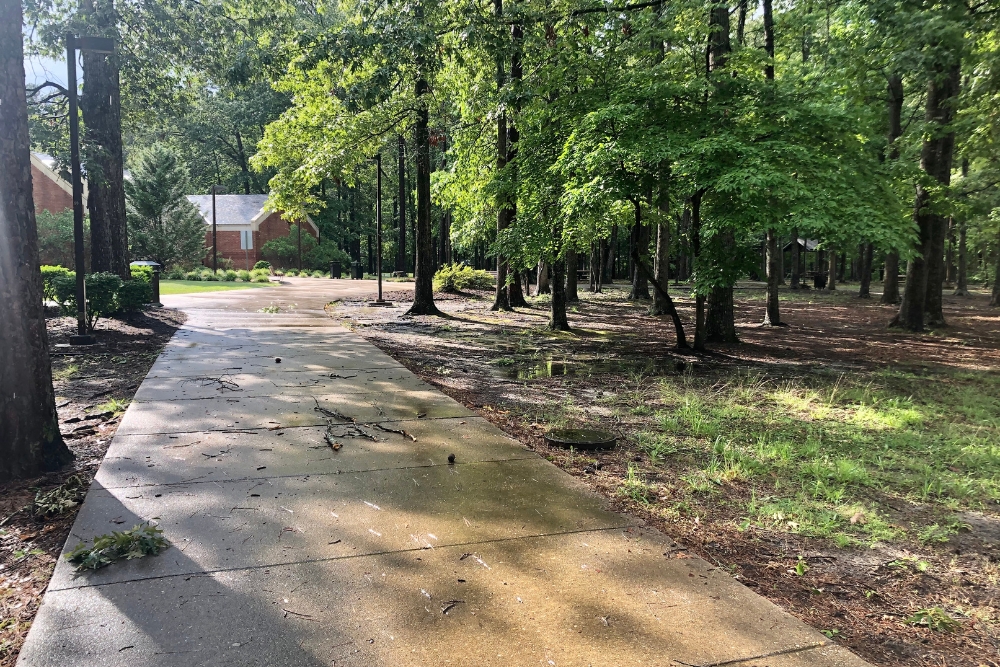
Maintaining a Concrete Path
A sealed concrete path needs very little. A wash down with a hose or pressure washer once or twice a year removes dirt, moss, and organic buildup that can make the surface slippery over time.
The sealer should be re-applied every two to three years to keep the surface protected. If the path is starting to look powdery, absorbing water rather than beading it off, or showing surface staining that won’t wash out, it’s time to re-seal. Surfaces with minor cracking or wear can also be resurfaced without needing a full replacement.
Questions to Ask Before the Job Starts
- What fall will the path be graded to, and where does the water go?
- Where will control joints be placed, and how will they be finished?
- What sealer is being used, and is it included in the quote?
- Will excavation and sub-base preparation be included, or quoted separately?
- What’s the cure time before the path can be used?
A concreter who answers these questions without hesitation knows what they’re doing. Vague answers on drainage or control joints are worth probing.
Get a Quote for Concrete Paths in Melbourne
Con Ops lays concrete paths and footpaths across Melbourne’s south-east, including Clayton, Glen Waverley, Oakleigh, Mulgrave, Chadstone, and Mount Waverley. Find out more about our concrete pathway services, or call 1800 266 677 for a free quote.
Frequently Asked Questions
How much does a concrete path cost in Melbourne?
A standard brushed concrete path in Melbourne typically runs $55 to $80 per m2. For a 900mm-wide path, that works out to roughly $50 to $72 per linear metre. Most residential jobs fall in the $600 to $2,500 range depending on length, finish, and any excavation required.
Do I need council approval for a concrete path in Melbourne?
A private path within your property boundary generally doesn’t require approval. If the path connects to a council footpath or kerb crossing, you’ll need to check with your local council. Requirements vary across Melbourne’s south-east suburbs, so it’s worth a quick call before you start.
How long does a concrete path last?
A properly poured and sealed concrete path should last 20 to 30 years with basic maintenance. The main factors that shorten lifespan are inadequate sub-base preparation, missing control joints, and letting the sealer break down without re-application.
Can concrete paths be laid in wet weather?
No. Concrete needs dry conditions during the pour and the initial curing period. Rain on fresh concrete can wash out the surface finish and affect the strength of the mix. Most concreters will reschedule rather than risk a pour in uncertain weather.
What’s the difference between a path and a footpath?
In a residential context, a path typically refers to a private walkway within your property. A footpath usually refers to the paved area between your property boundary and the road, which is council-maintained in most Melbourne suburbs. If you want work done on the council footpath strip, check with your local council before starting.
If you’re also looking at a driveway, see our concrete driveways page for more on options and finishes. Combining both jobs in a single booking is the most cost-effective way to get the work done.