
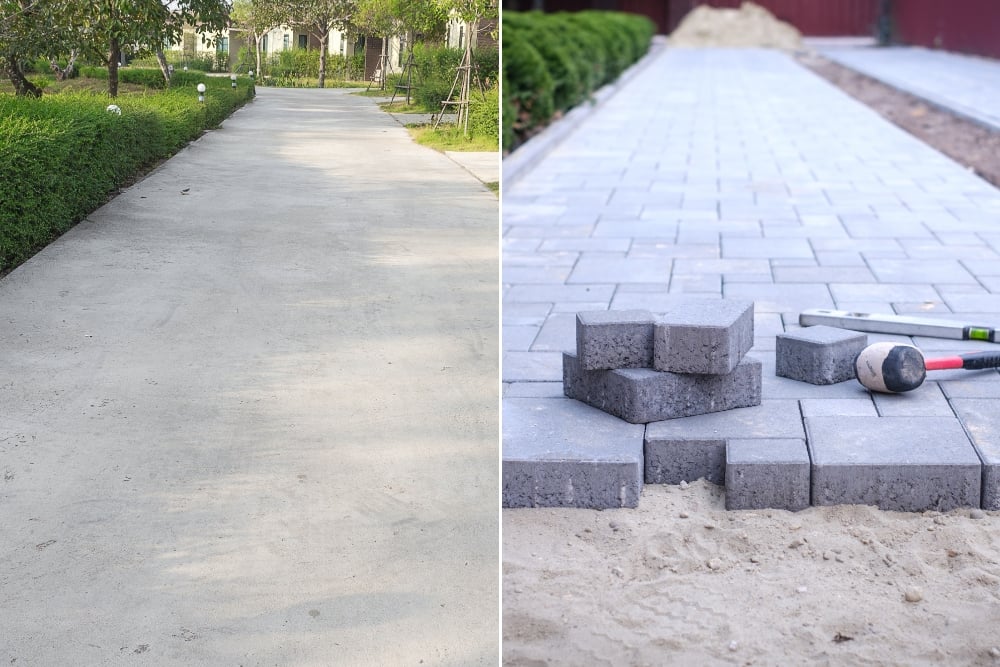
It’s one of the most common questions homeowners ask before a pathway job: should I go with concrete or pavers? Both are widely used in Melbourne and both can look great. But they perform differently, cost differently, and suit different situations.
This guide compares the two options across the factors that matter: upfront cost, durability, maintenance, design flexibility, and what each one does in Melbourne’s specific conditions.
The Short Answer
Concrete is generally better value for straightforward paths and driveways where longevity and low maintenance are the priority. Pavers offer more design flexibility and easier spot repairs but cost more upfront and need more ongoing attention to keep them looking good.
Neither is the wrong choice. The right one depends on your budget, the look you’re after, and how much ongoing maintenance you’re willing to do.
Cost Comparison
Concrete
Poured concrete is almost always cheaper to install than pavers. A standard brushed concrete path in Melbourne typically runs $55 to $80 per m2 installed. Decorative finishes like exposed aggregate or stencilled concrete cost more, $80 to $140 per m2, but are still generally below premium paver options.
The cost-effectiveness improves on larger areas because setup, formwork, and delivery costs are spread across more square metres.
Pavers
Paver installation in Melbourne typically runs $90 to $180 per m2 depending on the paver type and pattern complexity. Concrete pavers sit at the lower end. Clay brick pavers, natural bluestone, and granite come in at the higher end. Installation labour is also higher because pavers are laid individually on a prepared sand or mortar bed.
The gap narrows slightly over time if repairs are needed, since individual pavers can be replaced without disturbing the surrounding surface. A cracked concrete slab requires patching or resurfacing of a larger area.
Durability in Melbourne’s Climate
Melbourne’s weather is the deciding factor here more than people realise.
Thermal movement
Melbourne experiences one of the widest temperature ranges of any Australian capital, regularly swinging from 10 to 40 degrees Celsius within the same week. Concrete is a monolithic surface, meaning it expands and contracts as a single unit. Properly placed control joints manage this movement, but poorly jointed concrete will crack. Pavers are individual units with gaps between them that allow movement without cracking. That’s a genuine advantage in Melbourne conditions.
Reactive clay soils
Many suburbs across Melbourne’s south-east sit on reactive clay soils that shrink in dry summers and swell after rain. Both materials are affected by ground movement, but pavers tend to show it more visibly as individual units settle unevenly. Concrete slabs can crack if the base moves, but a well-prepared sub-base under either material reduces the risk significantly.
Longevity
A well-poured concrete path lasts 20 to 30 years with basic maintenance. Quality pavers in a well-prepared base can last just as long, but the jointing sand between them needs periodic replenishment, and the surface may need relevelling over time as individual units settle. Neither material has a clear lifespan advantage when installed correctly.
Maintenance
Concrete
Concrete requires relatively little maintenance once it’s sealed. A pressure wash once or twice a year removes organic buildup and keeps the surface looking clean. The sealer should be re-applied every two to three years. If the surface develops cracks or wear after many years, resurfacing is an option that restores the surface without replacement.
Pavers
Pavers need more ongoing attention. The jointing material between pavers, whether sand or mortar, breaks down over time and allows weed growth, insect activity, and water penetration into the base. Joints need to be topped up every few years. Individual pavers can stain, and because they’re separate units, colour variation can develop over time as some pavers bleach more than others in direct sun.
The ability to lift and relay individual pavers is a genuine maintenance advantage if something fails or a service trench needs to be dug through the path. With concrete, any underground work means cutting and patching, which is rarely invisible.
Design Flexibility
Concrete
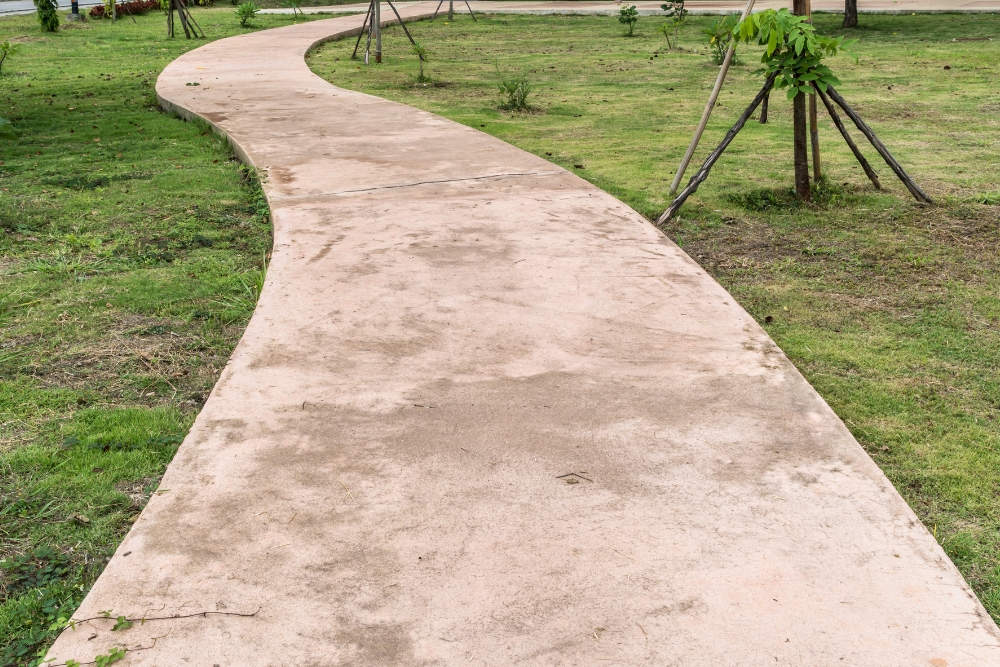
Concrete has improved significantly as a design material. The types of concrete pathways available now include plain brushed, exposed aggregate, coloured oxide finishes, and stencilled patterns that replicate the look of brick, slate, or stone. These finishes can be applied to new pours or as overlays on existing surfaces.
The constraint with concrete is that the design is locked in once the slab is poured. Changing the look later means resurfacing or replacement.
Pavers
Pavers offer more inherent design flexibility. The range of shapes, sizes, colours, and materials available, from basic concrete pavers through to bluestone, granite, and clay brick, is broader than what’s achievable with poured concrete. Pattern options include running bond, herringbone, basketweave, and random layouts that are difficult or expensive to replicate convincingly with stencilled concrete.
Pavers also allow changes later. If the garden style evolves, they can be lifted and relaid in a different pattern or replaced with a different material.
Resale Value and Street Appeal
Both materials can add to a property’s street appeal if they’re well-chosen and properly installed. In Melbourne’s current property market, neither concrete nor pavers has a clear advantage on resale value as a standalone factor.
What tends to matter more is whether the surface looks cared for and suits the style of the property. A well-finished exposed aggregate concrete path on a contemporary home looks better than cheap, weathered pavers. Quality natural stone pavers on a heritage home look better than plain grey brushed concrete. The material matters less than how well it fits the overall property.
Side-by-Side Summary
| Factor | Concrete | Pavers |
| Upfront cost | Lower ($55–$140/m2) | Higher ($90–$180/m2) |
| Thermal movement | Needs control joints | Individual units flex naturally |
| Reactive clay soils | Risk of cracking if base moves | Risk of uneven settling |
| Longevity | 20–30 years with basic care | 20–30 years if base is sound |
| Ongoing maintenance | Low (seal every 2–3 years) | Moderate (joints, relevelling) |
| Repair if damaged | Patch or resurface | Replace individual units |
| Design options | Good (coloured, textured, stencilled) | Broader (material, pattern, size) |
| Service access later | Requires cutting | Lift and relay |
Which Should You Choose?
Choose concrete if you want a lower upfront cost, minimal ongoing maintenance, and a clean result that suits a modern or contemporary property. It’s particularly well suited to straight paths, driveways, and pool surrounds where a seamless surface makes sense.
Choose pavers if design variety matters, if the property style suits a traditional or natural look, or if you know the path may need to be lifted for services at some point. Budget for proper base preparation and expect to spend some time on joint maintenance every few years.
If you’re genuinely undecided, a site visit helps. The shape of the path, the existing garden style, and the condition of the ground can all point toward one option over the other.
Get a Quote for Pathways in Melbourne
Con Ops installs concrete paths and footpaths across Melbourne’s south-east, including Clayton, Glen Waverley, Oakleigh, Mulgrave, Chadstone, and Mount Waverley. Find out more about our concrete pathway services, or call 1800 266 677 to arrange a free quote.
Frequently Asked Questions
Are pavers or concrete better for Melbourne’s weather?
Pavers handle Melbourne’s temperature swings slightly better because the individual units can move independently without cracking. Concrete manages well too when it’s properly jointed, but the risk of visible cracking is higher on a monolithic surface with inadequate control joints. Both materials perform well on a properly prepared base.
Can concrete be made to look like pavers?
Yes. Stencilled and patterned concrete can replicate the look of brick, slate, and stone pavers convincingly. The difference is that stencilled concrete is a single surface rather than individual units, so any cracking runs across the pattern rather than following a joint line. The look is good value, but it’s worth managing expectations that it won’t be identical to actual pavers up close.
Which is easier to repair if something goes wrong?
Pavers are easier to repair locally. A cracked or stained paver can be lifted and replaced without disturbing the surrounding surface. Concrete patch repairs are harder to make invisible because new concrete rarely matches the colour and texture of aged concrete exactly. Resurfacing the whole area produces a more consistent result when concrete does need significant repair.
How long do pavers last in Melbourne?
Quality pavers on a well-prepared base should last 20 to 30 years or more. The main factors that shorten their life in Melbourne are reactive clay soils causing uneven settling, neglected joint maintenance allowing water into the base, and poor original base preparation. Annual inspection and joint topping as needed is the most effective maintenance routine.
Does one option add more value to a home than the other?
Neither has a consistent advantage on resale. What matters more is that the surface suits the property, looks well-maintained, and is functionally sound. A premium paver installation on the right property will present better than budget concrete. But well-finished decorative concrete on a contemporary home will present better than weathered or poorly maintained pavers.