
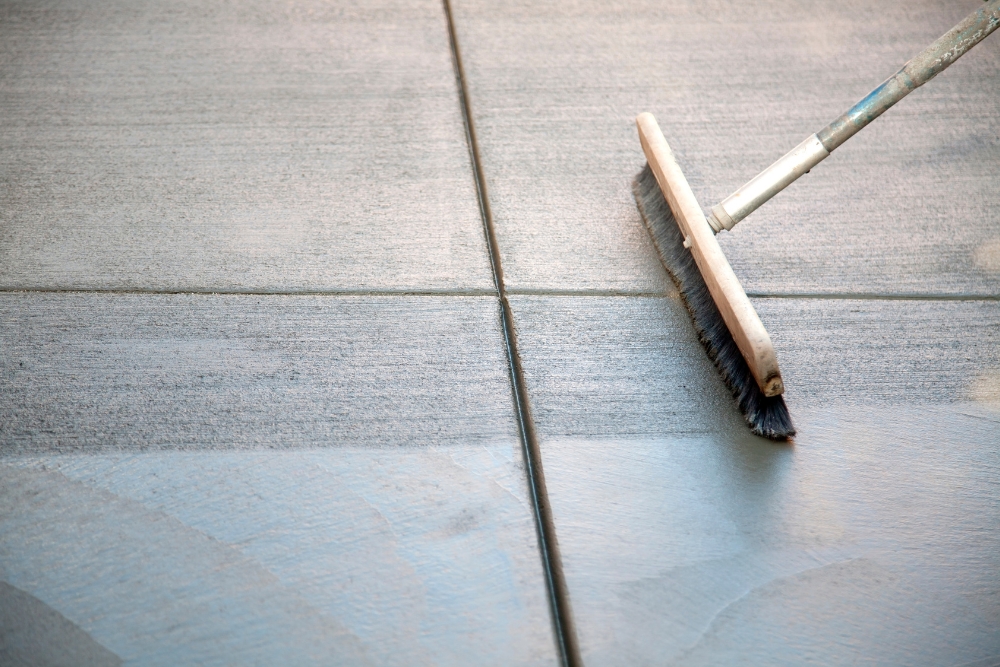
Concrete is durable, but it doesn’t last forever without some attention. Most outdoor concrete surfaces in Melbourne will start showing wear after 10 to 15 years – surface cracking, spalling, fading colour, or a general tired look that doesn’t match the rest of the property.
Replacing concrete is expensive and disruptive. In most cases, resurfacing is a better option: it restores the surface, improves its appearance, and extends its life, at a fraction of the cost of tearing it out and starting again.
This guide covers outdoor concrete resurfacing across the surfaces it’s most commonly used for in Melbourne: patios, paths, driveways, and pool surrounds.
What Is Outdoor Concrete Resurfacing?
Resurfacing means applying a new layer of material over the top of existing concrete. The overlay bonds to the old surface and creates a fresh, durable finish. Depending on the product and technique used, the overlay can be plain, coloured, textured, or patterned.
The process doesn’t involve breaking up the existing slab. That’s what makes it cost-effective: you’re keeping the structural base you already have and renewing the surface above it. The job typically takes one to two days for a standard residential area, compared to the week or more a full replacement can involve.
The critical requirement is that the existing slab must be structurally sound. Resurfacing fixes surface problems. It doesn’t fix a slab that’s heaving, cracking through its full depth, or sitting on a failed base. A site assessment before quoting is the only reliable way to confirm whether a surface is a good candidate.
Patio Resurfacing in Melbourne
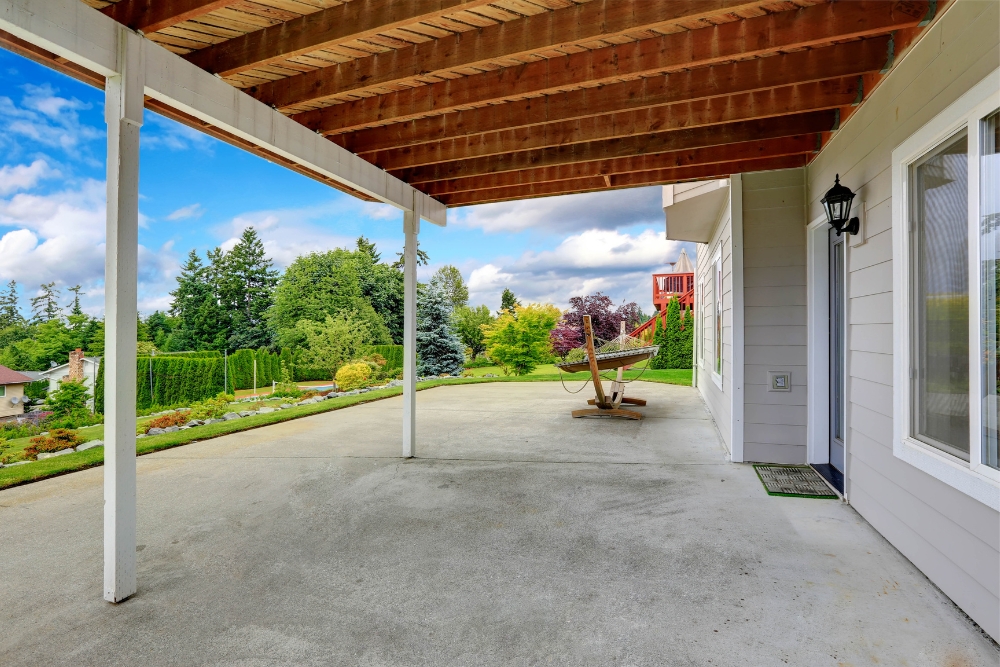
Patios take a lot of punishment. Years of outdoor furniture, foot traffic, BBQ grease, and Melbourne weather cycles leave most concrete patios looking considerably worse than when they were poured. Surface staining, surface cracking, and faded colour are the typical complaints.
Resurfacing a patio usually involves cleaning the surface thoroughly, filling any cracks and low spots, then applying a decorative overlay in the chosen finish. Popular options for patios include coloured overlays in charcoal or sandstone tones, exposed aggregate overlays for a natural look, and stencilled patterns that give the appearance of pavers or stone without the individual unit movement risk.
A resurfaced patio in a standard finish typically costs $45 to $85 per m2, putting a 30 to 40 m2 entertaining area in the $1,500 to $3,500 range. See our concrete resurfacing services page for more detail.
Path Resurfacing in Melbourne
Concrete paths show wear differently to patios. The damage is usually linear: cracking along the length of the path, surface flaking from foot traffic, and staining from organic material like leaves and moss. Paths alongside the house are also prone to discolouration from water runoff and fertiliser.
Resurfacing a path restores the surface and can change the finish at the same time. A plain grey brushed path can be resurfaced in a coloured or exposed aggregate finish that ties in better with updated landscaping. The process is the same as for patios: prep, crack repair, overlay, seal.
Path resurfacing typically runs $55 to $90 per m2. Find out more about our concrete pathway services if you’re also considering a new path alongside the resurfacing work.
Pool Surround Resurfacing in Melbourne
Pool surrounds wear faster than most outdoor surfaces. Constant water exposure, pool chemicals, bare feet, and the slip-resistance demands of a wet environment all take their toll. Surface spalling, chemical staining, and loss of the original texture are common after 10 to 15 years.
Resurfacing a pool surround needs to deliver a result that’s slip-resistant, chemically resistant, and capable of handling the constant wet-dry cycle around a pool. Products used for pool surrounds are typically more robust than standard decorative overlays, and the finish needs to maintain its texture over time.
Pool surround resurfacing typically costs $50 to $90 per m2. Find out more about our concrete pool surround services, including bond beam repair if the pool edge is also showing structural wear.
Driveway Resurfacing in Melbourne
Driveways are the most heavily loaded outdoor concrete surface at most properties. Vehicle weight, oil drips, and the thermal stress of a dark concrete surface in Melbourne summers all contribute to surface wear over time.
A driveway resurfacing overlay can restore a worn surface and update the finish – brushed, exposed aggregate, or coloured. Driveway resurfacing typically runs $40 to $80 per m2. See our guide to concrete driveway resurfacing in Melbourne for a full breakdown of what’s involved, or visit our concrete driveways page if you’re weighing up resurfacing versus replacement.
At a Glance: Outdoor Concrete Resurfacing by Surface
| Surface | Common signs it’s needed | Cost guide (per m2) | Service page |
| Patio | Staining, surface cracks, faded colour | $45 – $85 | Resurfacing |
| Path / footpath | Flaking, cracking, discolouration | $55 – $90 | Pathways |
| Pool surround | Spalling, chemical stain, lost texture | $50 – $90 | Pool Surrounds |
| Driveway | Surface wear, oil staining, cracking | $40 – $80 | Resurfacing |
When Resurfacing Makes Sense vs. When to Replace
Resurfacing is the right call when the existing slab is structurally intact and the problem is at the surface. If the concrete looks worn but isn’t moving, heaving, or cracking through its full depth, resurfacing will give you a result that lasts another 10 to 15 years.
Replacement makes more sense when the slab has shifted, when tree roots have pushed sections out of level, or when the base has failed and the concrete is cracking in ways that follow movement rather than shrinkage. A resurfacing overlay applied to a moving slab will crack along the same lines within months.
If you’re not sure which applies, a site assessment resolves it quickly. And if the surface is sound but just needs protection rather than a full overlay, re-sealing is often the most cost-effective option.
Why Melbourne Conditions Matter
Melbourne’s climate is harder on outdoor concrete than most Australian cities. The temperature range, from 40-degree summer days to near-freezing winter nights, creates significant thermal expansion and contraction in concrete surfaces. Combined with reactive clay soils in many south-east suburbs, this means surfaces that were poured without adequate control joints or sealing often show more wear than their age would suggest.
When specifying a resurfacing job in Melbourne, the product choice and application method need to account for this. A flexible overlay applied correctly will handle Melbourne’s temperature swings without delaminating. An unsuitable product or a poorly prepared surface won’t.
Get a Quote for Outdoor Concrete Resurfacing in Melbourne
Con Ops resurfaces outdoor concrete across Melbourne’s south-east, including Clayton, Glen Waverley, Oakleigh, Mulgrave, Chadstone, and Mount Waverley. For a single path or a full backyard including patio, pool surround, and driveway, we’ll assess the surfaces, confirm what’s viable, and give you a fixed price before any work starts. Call 1800 266 677 or visit our concrete resurfacing page to find out more.
Frequently Asked Questions
Can all outdoor concrete surfaces be resurfaced at the same time?
Yes, and combining surfaces in a single job is almost always more cost-effective than booking them separately. Setup, equipment, and mobilisation costs are shared across the job, which reduces the per-m2 rate. If your patio, path, and pool surround all need attention, doing them together makes sense.
How long does outdoor concrete resurfacing last in Melbourne?
A properly applied overlay on a sound slab should last 10 to 15 years with normal maintenance. The main variables are product quality, surface preparation, and whether the surface is sealed and re-sealed on schedule. Melbourne’s temperature range means sealing matters more here than in more temperate climates.
Does resurfaced concrete need to be sealed?
Yes. Sealing protects the overlay from water penetration, staining, and UV degradation. For outdoor surfaces in Melbourne, a quality penetrating or surface sealer should be applied after the overlay cures and re-applied every two to three years.
How do I know if my concrete is suitable for resurfacing?
The main test is whether the slab is structurally stable. If it’s cracking at the surface from age and wear but isn’t heaving or moving, it’s generally a good candidate. If sections have shifted relative to each other, or if there’s significant tree root interference, that needs to be addressed first. A site visit from an experienced concreter is the most reliable way to confirm.
Can resurfacing change the colour or finish of my existing concrete?
Yes. That’s one of the main reasons people choose resurfacing over re-sealing. An overlay can completely change the colour, texture, and visual style of the surface. Plain grey concrete can become charcoal exposed aggregate or a stencilled pattern. The existing surface just needs to be clean, sound, and properly prepared before the overlay goes down.