
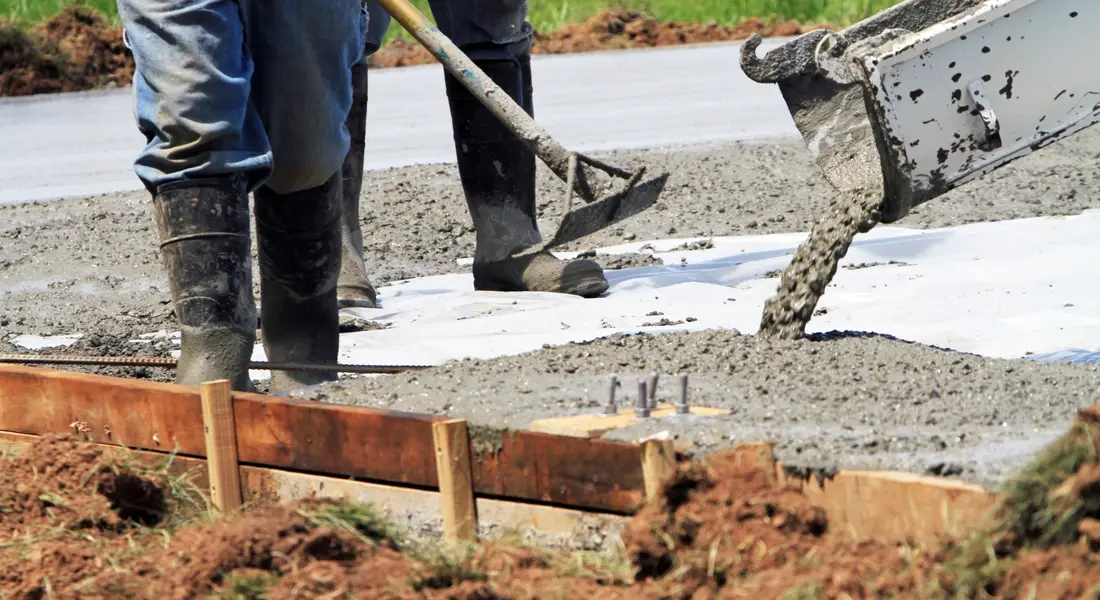
Concrete is everywhere in residential building, and traditional production carries a real environmental cost. Cement, the binder in standard concrete, is responsible for a meaningful share of global CO2 emissions, largely from the high-temperature process used to produce it. As more homeowners and builders look to cut their footprint, lower-impact concrete options are becoming a genuine part of the conversation, not just a niche add-on.
Recycled aggregate concrete
Instead of virgin sand and gravel, this mix uses crushed material from demolished structures. It limits landfill waste and cuts demand for new quarrying, and it performs well for driveways, pathways, shed slabs and other non-decorative uses. It is not the right call for a polished feature finish, but for a practical, durable base it does the job while reusing material that would otherwise be dumped.
Fly ash concrete
Fly ash is a by-product of coal-fired power generation and can replace a portion of the cement in a mix. That cuts reliance on clinker-based cement and the emissions that come with producing it. Fly ash also improves long-term strength and holds up well where chemical exposure is a factor, useful for homes near drainage systems or in coastal air.
Geopolymer concrete
This mix combines industrial by-products like slag or fly ash with alkaline activators, removing the need for standard cement altogether. It is durable, handles heat and harsh weather well, and suits footings, slabs and structural walls where long-term performance matters. It also tends to set faster in warm weather, which can help keep a build on schedule through a Melbourne summer.
Hempcrete
A lightweight, breathable mix of plant fibre and lime, hempcrete is not a structural material, but it performs well as insulation and internal walling where energy efficiency is the goal. It helps regulate indoor temperature and humidity, cutting reliance on heating and cooling, and the raw material produces lower emissions to manufacture than most standard construction inputs.
Matching the material to the job
Recycled aggregate suits base layers and non-exposed concrete. Fly ash concrete works well for slabs, driveways and retaining walls. Geopolymer concrete is best kept for structural or long-term applications. Hempcrete belongs in insulation and non-load-bearing wall systems. Picking the right one comes down to what the project actually needs, not just which option sounds the greenest.
The benefits beyond emissions
Lower-impact mixes are not only about carbon. They cut landfill waste, reduce pressure on raw material extraction, and in several cases improve durability, which means less replacement and repair over a building's life. A structure that lasts longer uses fewer total resources over time, and that adds up more than any single choice at the pour stage.
How we approach it
We assess each residential site on its own merits and match the material to the local conditions and structural requirements, rather than defaulting to one option because it is fashionable. We do not overuse anything where a standard mix would do the job just as well. Our focus is meeting the structural and compliance requirements first, then looking at where a lower-impact material genuinely fits.
If you are planning a build and want to talk through material options that reduce environmental impact without adding risk, contact us and we will walk through what actually applies to your site.